high pressure laminate toilet partitions
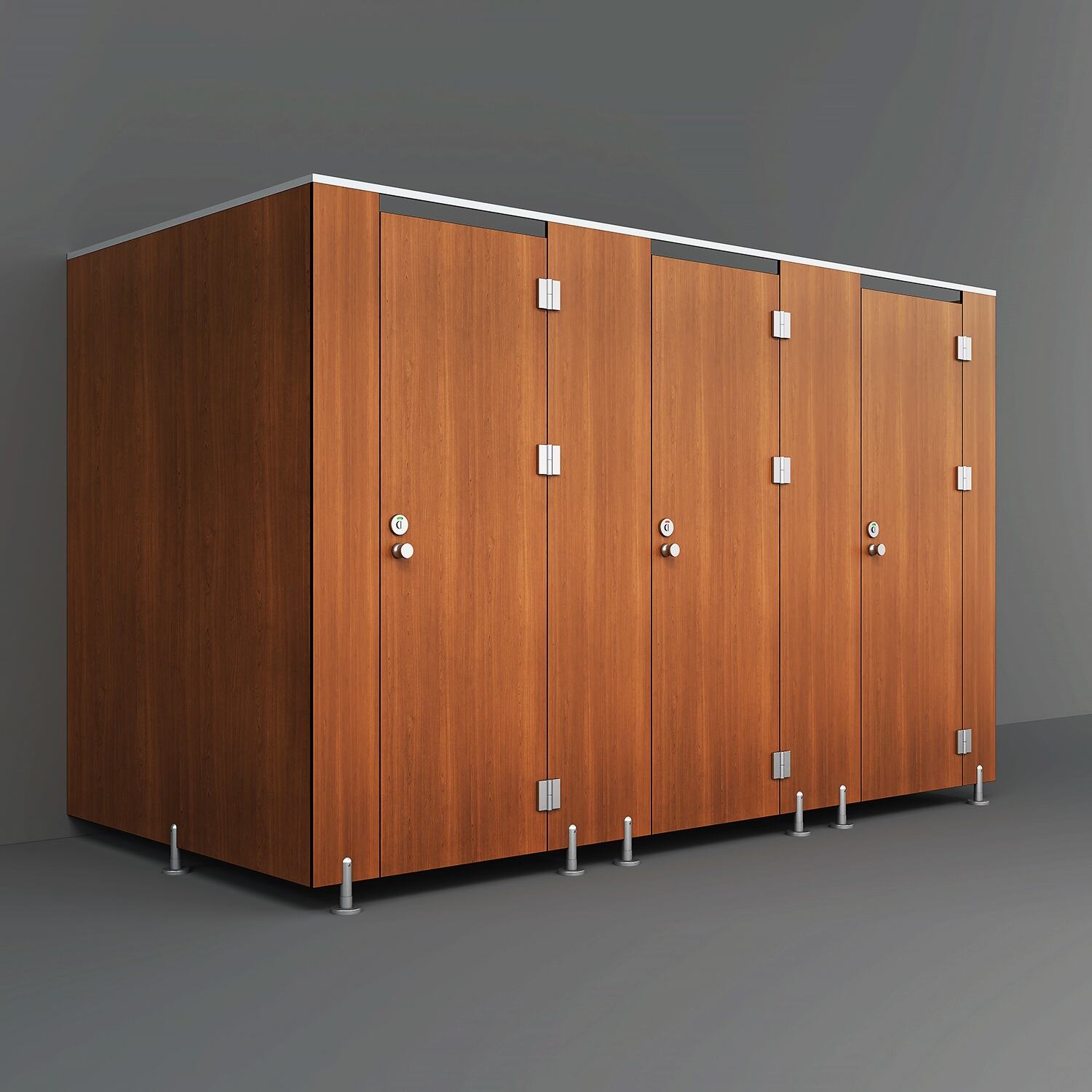
High pressure laminate toilet partitions represent a revolutionary approach to commercial restroom design, combining durability with aesthetic appeal to create superior washroom environments. These partitions are manufactured using an advanced process that fuses multiple layers of kraft paper with thermosetting resins under extreme heat and pressure, typically exceeding 1,000 PSI and temperatures around 300 degrees Fahrenheit. This intensive manufacturing process creates a solid, homogeneous material that delivers exceptional performance characteristics. The technological innovation behind high pressure laminate toilet partitions involves impregnating decorative surface papers with melamine formaldehyde resin, while the core layers consist of kraft paper saturated with phenolic resin. This multi-layer construction ensures consistent quality throughout the material thickness, eliminating the risk of delamination common in lesser materials. The surface finish receives specialized treatment to enhance resistance against moisture, chemicals, and daily wear. High pressure laminate toilet partitions excel in commercial applications including office buildings, schools, healthcare facilities, airports, shopping centers, and recreational venues. Their versatility allows for customization in colors, textures, and patterns to match any architectural design scheme. The material maintains dimensional stability under varying humidity conditions, making it ideal for high-traffic washroom environments. Installation systems for these partitions offer flexibility with overhead braced, floor mounted, and ceiling hung configurations. The precision engineering ensures proper fit and alignment while accommodating building tolerances. Modern high pressure laminate toilet partitions incorporate antimicrobial properties that inhibit bacterial growth, contributing to improved hygiene standards. These partitions resist graffiti, scratches, and impact damage while maintaining their original appearance over extended periods. The non-porous surface prevents moisture absorption, eliminating concerns about warping, swelling, or degradation commonly associated with traditional materials.
 EN
EN


 ONLINE