EN
EN


Choosing the right locker for your facility goes far beyond aesthetics or storage capacity. Whether you manage a fitness center, bowling alley, corporate office, or recreational complex, the security features built into your locker system directly determine how well you protect users' belongings and how much trust your guests place in your operation. Security is not a checkbox — it is a layered set of engineering decisions that separates a reliable locker from a liability. Understanding which features genuinely matter, and why, is the first step toward making a confident, well-informed purchase.
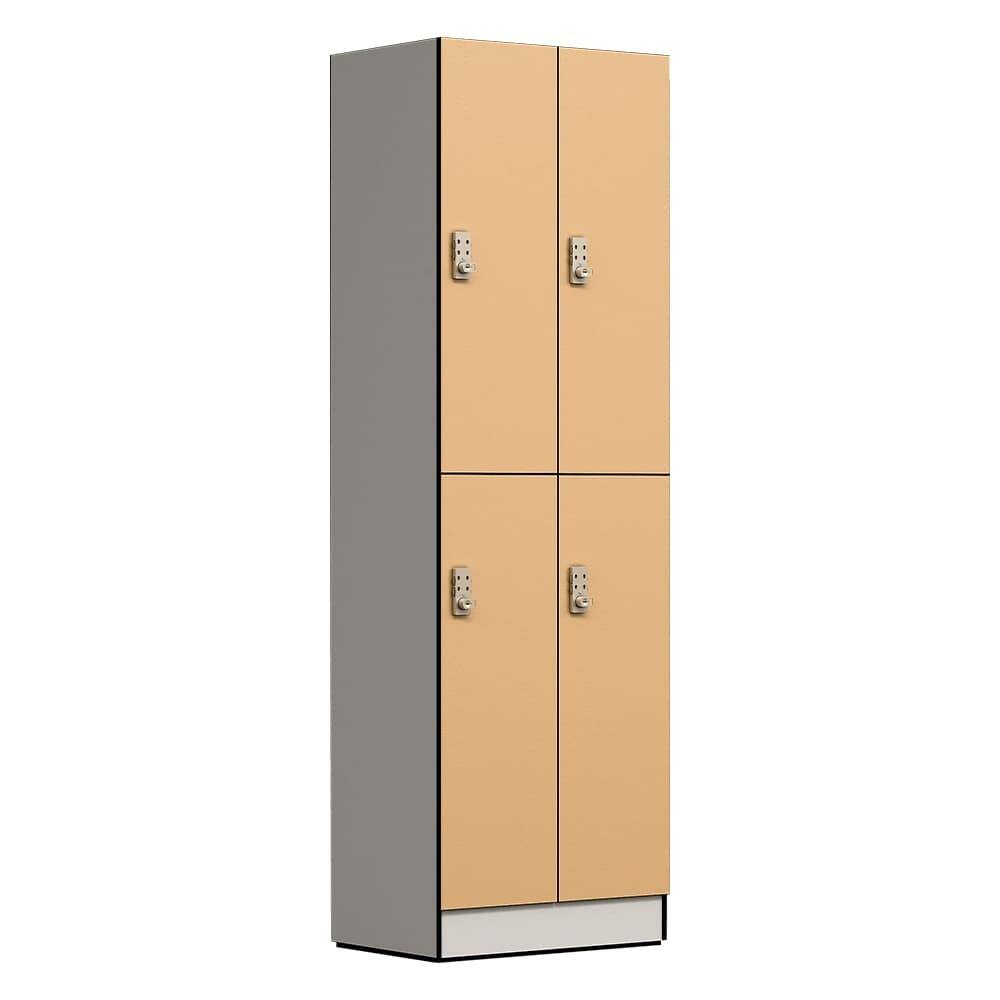
The security landscape for locker systems has evolved considerably in recent years. Traditional padlock-based units have given way to electronically managed, pin-code, and RFID-enabled systems that offer far superior access control and accountability. Facility managers today face a diverse set of requirements — from high-turnover gym environments to semi-permanent workplace storage — and no single locker configuration fits every scenario. The sections below break down the security features that matter most, how they interact, and how to prioritize them based on your operational context.
Lock Mechanism: The First Line of Defense
Electronic and Pin Code Lock Systems
The type of locking mechanism in a locker is arguably the most critical security feature to evaluate. Electronic locks — particularly pin code systems — have become the industry benchmark for facilities that prioritize both user convenience and security integrity. Unlike traditional key locks, pin code systems eliminate the risk of lost or duplicated keys entirely. Each user sets their own temporary code, meaning no master key vulnerability exists that could be exploited by unauthorized parties.
A pin code locker also supports self-service operation, which is especially valuable in high-traffic venues like fitness studios, bowling alleys, and sports facilities. Users can secure and retrieve their belongings without staff intervention, reducing both operational overhead and the possibility of human error in key management. The self-service element also means the security is consistently enforced — there is no reliance on staff to lock units properly.
Advanced electronic locker locks often incorporate anti-tamper features such as automatic lockout after multiple incorrect pin entries. This brute-force protection is essential in public environments where bad actors may attempt repeated guesses. Some systems also incorporate an emergency override mechanism accessible only to facility administrators, ensuring that legitimate access issues can be resolved without compromising everyday security.
Mechanical Backup and Failsafe Provisions
While electronic locking is the preferred security standard, a well-designed locker should also incorporate a reliable mechanical failsafe. Power outages or battery failures in electronic systems should not leave users locked out of their belongings. Quality locker manufacturers address this by integrating a concealed override cylinder that is accessible only to authorized personnel with a master key.
The design of this failsafe matters significantly from a security standpoint. A poorly implemented mechanical override — such as a standard exposed padlock ring — defeats the purpose of the electronic system by introducing an easy-to-bypass vulnerability. The best designs conceal the mechanical override behind the electronic control panel, making it invisible and inaccessible to the general user while still providing facility managers with a reliable emergency option.
Material and Structural Security
Body Construction and Panel Integrity
A locker's security is only as strong as the physical structure surrounding the lock. High-Pressure Laminate (HPL) panels have emerged as a premium construction choice not only for their durability and moisture resistance but also for their structural rigidity. A locker body built from dense HPL panels resists forced entry attempts far better than thin-gauge metal or low-density composite materials. The rigidity of the panels means that the door and frame cannot be easily bent or pried apart even under significant mechanical force.
Structural integrity also depends on the quality of the internal frame and the way the locker is assembled. Welded or interlocked corner joints are significantly more resistant to forced entry than screw-assembled frames that may loosen over time. When evaluating a locker for a high-security application, examining the corner reinforcement and internal bracing is just as important as reviewing the locking mechanism itself.
Door Hinge and Anti-Pry Design
The hinge system on a locker door is a frequently overlooked security component. Exposed hinges with standard pins can be removed by unauthorized individuals using basic tools, effectively bypassing even the most sophisticated lock. A secure locker design incorporates concealed or tamper-resistant hinges that cannot be accessed without opening the door from the locked side.
Anti-pry features such as recessed door edges, overlap door frames, and tight door-to-body tolerances further reduce the risk of unauthorized entry. A well-manufactured locker should have a door gap tight enough that no tool can be inserted between the door and the frame to manipulate the locking bolt. These structural design considerations are often what separate commercial-grade units from cheaper alternatives that may look similar on the surface.
Access Control and Auditability
Individual vs. Shared Access Systems
Security in a locker context is not just about preventing unauthorized physical access — it is also about managing who has access, when, and under what conditions. Modern access control systems give facility operators granular control over locker assignment. Some systems allow permanent individual assignment for employees or members, while others support transient use where each session generates a new access code.
In environments like gyms or recreational venues, transient self-service locker assignment is highly preferable from a security standpoint. It ensures that no user retains access to a unit between visits, eliminating the risk of someone returning after hours to retrieve an item they deliberately left. For corporate or workplace installations, individually assigned locker units with fixed access credentials and regular access audits provide the best balance of security and practicality.
Audit Trails and Digital Accountability
Digital locker systems that log access events provide a significant security advantage over purely mechanical alternatives. When every open-and-close event is recorded with a timestamp and associated user credential, facility managers have an invaluable forensic tool in the event of a theft or security dispute. Audit trail capabilities allow staff to quickly narrow down when a unit was last accessed and by whom, dramatically reducing investigation time.
Even in smaller facilities that do not require enterprise-grade monitoring, the mere presence of a visible electronic interface on a locker serves as a strong deterrent. Users are generally less likely to attempt unauthorized access when they know the system is capable of logging activity. Auditability, therefore, functions both as a reactive investigative tool and as a proactive deterrent to misconduct.
Environmental and Long-Term Security Considerations
Moisture, Corrosion, and Tamper Resistance Over Time
A locker that begins its service life with excellent security features can degrade significantly over time if the materials are not suited to the operating environment. Facilities such as swimming pools, spas, and outdoor recreation areas expose lockers to high humidity, chlorine, and moisture — conditions that corrode metal components and degrade electronic systems if they are not properly specified for the environment.
HPL-constructed locker units with moisture-resistant sealing provide consistent structural integrity over years of use in wet environments. Electronic lock components should be rated to appropriate ingress protection standards to prevent moisture infiltration that could cause malfunctions. A locker that maintains its structural and functional security properties over a long service life represents not just a better investment but a lower liability risk for the facility operator.
Vandal Resistance and Surface Durability
Vandalism is a practical security concern in any high-traffic public facility. A locker with a scratched, defaced, or damaged exterior is not merely an aesthetic problem — it can signal to users that the facility's security standards are compromised, reducing confidence in the entire installation. HPL surfaces are notably more resistant to scratching, graffiti, and impact damage than painted steel alternatives, maintaining a professional appearance and structural integrity even in demanding environments.
Vandal-resistant locker design also extends to the lock interface itself. Pin code keypads should be manufactured with durable, hard-wearing materials capable of withstanding repeated physical impact without compromising the lock mechanism. Recessed keypad designs that protect the electronics from direct blows are a preferred feature in facilities that handle high daily user volumes.
Customization and Integration With Facility Security Infrastructure
Master Access and Facility Management Integration
A locker system does not operate in isolation — it is part of a broader facility security infrastructure. For larger installations, the ability to integrate locker management with existing access control platforms, building management systems, or staff management software is a meaningful security advantage. Centralized management allows facility operators to remotely lock and unlock units, reset access codes, and generate usage reports without requiring physical interaction with individual lockers.
This level of integration is particularly valuable for facilities with multiple locker banks spread across different areas or floors. Security incidents can be responded to immediately from a central console rather than requiring staff to physically attend each affected unit. The result is faster incident response, better overall access management, and a stronger security posture across the entire facility.
Custom Configuration for Specific Security Environments
Different venues have genuinely different security needs, and a good locker solution should be configurable to match those requirements. Bowling alleys, for example, typically need lockers that support rapid self-service cycling with temporary pin codes and easy administrative reset between sessions. Golf facilities may require longer-duration secure storage with more robust physical construction to accommodate valuable equipment. Fitness centers often prioritize hygiene-resistant materials alongside electronic access control.
A locker system that can be specified — in terms of lock type, panel material, door configuration, and size — to fit the precise security and operational needs of the facility will consistently outperform a generic off-the-shelf unit in real-world performance. Custom configuration is not a luxury feature; it is a security enabler that ensures the physical and digital security of the installation aligns with the actual risk profile of the environment.
FAQ
What is the most important security feature to look for in a locker?
The locking mechanism is typically the most critical security feature. Electronic pin code locks offer the strongest combination of user convenience, access control, and anti-tamper protection. A locker equipped with a pin code system eliminates key duplication risks, supports self-service operation, and can include brute-force lockout protection after repeated incorrect entries.
Are HPL lockers more secure than metal lockers?
HPL locker panels offer comparable and in some cases superior structural security to standard painted steel, particularly in wet or corrosive environments. HPL is highly resistant to moisture, physical impact, and surface damage, meaning the structural integrity of the locker body is better maintained over time. For facilities with high humidity exposure, HPL-constructed lockers are often the more secure long-term choice.
How does audit trail functionality improve locker security?
An audit trail records every access event — including the time, the unit number, and the associated user credential — in a digital log. This gives facility managers a detailed forensic record that can be used to investigate incidents, resolve disputes, and identify unusual access patterns. The knowledge that a locker system logs all activity also deters unauthorized access attempts, functioning as both a reactive and proactive security tool.
Can a locker system be integrated with broader facility security platforms?
Yes. Many modern electronic locker systems are designed to integrate with facility access control platforms, building management systems, and staff management software. This allows centralized remote management, including the ability to lock or unlock individual units, reset codes, and generate usage reports. Integration is especially valuable for large facilities with multiple locker banks, enabling faster incident response and more consistent enforcement of security policies.