EN
EN


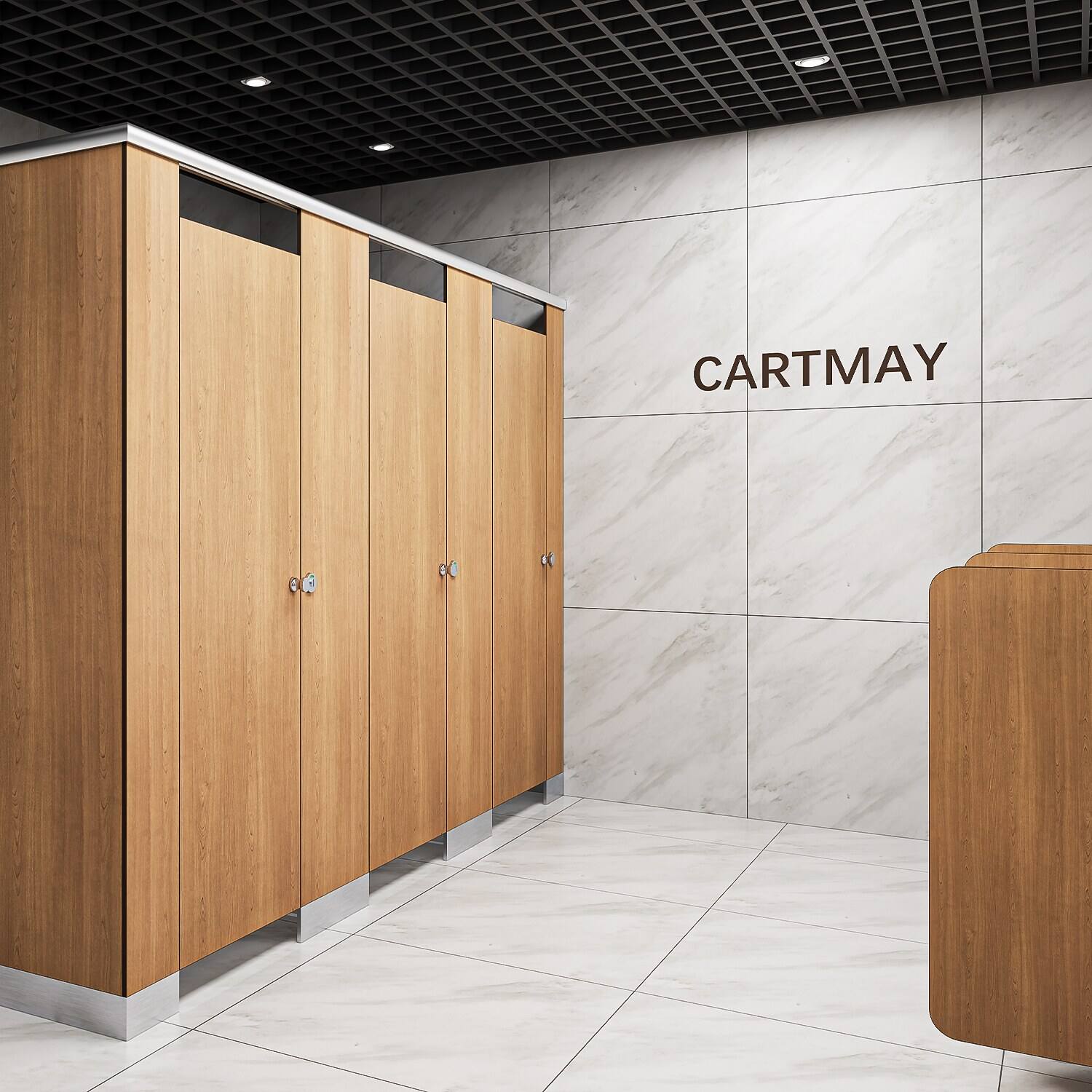
Selecting the right material for toilet cubicles in office environments is a decision that impacts durability, maintenance costs, hygiene standards, and overall user satisfaction. Office facilities managers face unique challenges when specifying restroom partitions, as these installations must withstand daily use by multiple occupants while maintaining a professional appearance and meeting stringent hygiene requirements. The material choice directly influences long-term operational costs, cleaning protocols, and the frequency of replacement cycles. Understanding which materials offer the best balance of performance characteristics for commercial office settings requires examining physical properties, environmental resistance, cost implications, and alignment with modern workplace standards.
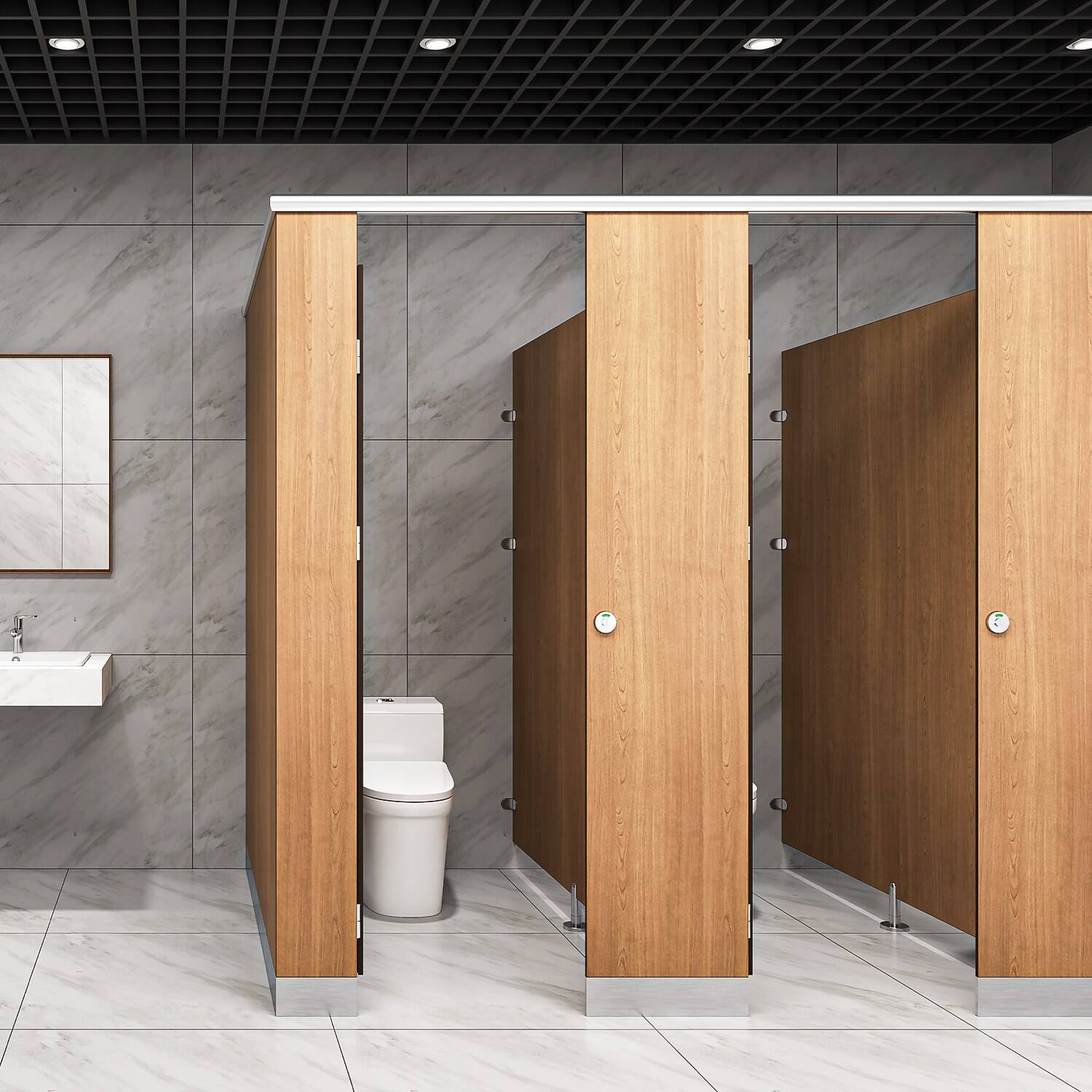
The commercial restroom partition market offers several distinct material categories, each engineered to address specific performance requirements and budget constraints. Office environments demand toilet cubicles that can endure constant traffic, resist moisture accumulation, prevent bacterial growth, and maintain structural integrity over extended service periods. Material selection must account for factors including building occupancy levels, maintenance resource availability, corporate aesthetic standards, and compliance with accessibility regulations. This comprehensive examination explores the functional characteristics, comparative advantages, and practical suitability of primary materials used in office toilet cubicles, providing decision-makers with the technical insight needed to specify partitions that deliver optimal performance within their operational context.
High-Pressure Laminate: The Premium Standard for Office Environments
Structural Composition and Manufacturing Process
High-pressure laminate represents the premier material choice for toilet cubicles in professional office settings, engineered through a specialized manufacturing process that bonds multiple layers of kraft paper with thermosetting resins under extreme pressure and temperature. This fabrication method produces a dense, non-porous surface material that exhibits exceptional resistance to moisture penetration, impact damage, and surface wear. The laminate sheets are typically mounted on a solid core substrate, creating partition panels with superior dimensional stability and structural rigidity. The manufacturing process allows for extensive customization in surface finishes, colors, and textures, enabling facilities managers to specify toilet cubicles that align with corporate interior design standards while delivering uncompromising functional performance.
The core substrate in quality high-pressure laminate toilet cubicles typically consists of compact grade laminate or particle board with moisture-resistant properties, ensuring the entire panel assembly maintains integrity even in high-humidity restroom environments. Surface laminate thickness in commercial-grade applications generally ranges from 0.7mm to 1.2mm, providing adequate protection against scratching, chemical exposure, and impact damage from typical office use. The bonding process creates a virtually impermeable barrier that prevents water absorption, eliminating the swelling, warping, and delamination issues that compromise lower-grade partition materials. This structural integrity translates to partition systems that maintain their appearance and functionality throughout service lives extending fifteen to twenty years in properly maintained office facilities.
Performance Characteristics in High-Traffic Office Settings
Office toilet cubicles constructed from high-pressure laminate demonstrate superior performance across multiple operational parameters critical to commercial restroom functionality. The material exhibits outstanding resistance to moisture, preventing the bacterial growth and odor retention that plague absorbent partition materials. The non-porous surface facilitates thorough cleaning with standard commercial disinfectants without degrading the finish or compromising structural integrity. Impact resistance ensures the panels withstand accidental collisions from cleaning equipment, luggage, or the normal bumps that occur in busy office restrooms. Chemical resistance allows the use of industrial-strength cleaning agents without causing discoloration, etching, or surface deterioration, supporting the rigorous hygiene protocols necessary in shared workplace facilities.
The dimensional stability of high-pressure laminate toilet cubicles eliminates the expansion and contraction cycles that cause operational problems in partition systems manufactured from hygroscopic materials. Doors maintain proper clearances and alignment throughout their service life, preventing the binding, scraping, and hardware strain that necessitate frequent adjustments in lower-quality installations. The material's inherent fire resistance meets building code requirements for commercial occupancies without additional treatment, simplifying specification compliance and reducing project costs. Surface hardness prevents the scratching and graffiti damage that degrade the appearance of softer partition materials, maintaining a professional aesthetic that reflects positively on the organization's attention to facility quality.
Cost Considerations and Long-Term Value Proposition
While high-pressure laminate toilet cubicles represent a higher initial investment compared to economy materials, comprehensive lifecycle cost analysis consistently demonstrates superior value for office applications. The extended service life reduces replacement frequency, minimizing the disruption and expense associated with partition system renovation. Reduced maintenance requirements translate to lower labor costs and decreased consumption of cleaning supplies, generating ongoing operational savings throughout the installation's lifespan. The material's resistance to damage reduces repair incidents and associated costs, while the aesthetic durability maintains property value and eliminates premature replacement driven by appearance degradation rather than structural failure.
Facility managers evaluating total cost of ownership should consider that high-pressure laminate toilet cubicles typically require only routine cleaning to maintain optimal condition, eliminating the repainting, refinishing, or protective coating applications necessary with other materials. The absence of moisture-related deterioration prevents the mold remediation expenses and health concerns associated with water-damaged partition materials. Insurance implications merit consideration as well, since the fire-resistant properties of quality laminate partitions may qualify for premium reductions in commercial property coverage. When amortized over their typical fifteen to twenty-year service life, premium laminate toilet cubicles often demonstrate lower annual cost than economy alternatives requiring replacement every five to seven years.
Solid Phenolic Core: Maximum Durability for Demanding Applications
Material Engineering and Distinctive Properties
Solid phenolic core material represents the most robust option for toilet cubicles in office environments where maximum durability and moisture resistance are paramount concerns. This material consists entirely of layered kraft paper impregnated with phenolic resin and compressed under extreme heat and pressure, creating a homogeneous solid panel with through-color construction. Unlike laminate-faced products, solid phenolic partitions feature consistent material composition throughout their entire thickness, eliminating delamination risk and providing damage resistance that extends through the entire panel depth. The manufacturing process produces partitions with exceptional density and hardness, resulting in toilet cubicles that withstand the most demanding usage conditions while maintaining structural and aesthetic integrity.
The through-color construction of solid phenolic toilet cubicles ensures that surface scratches or edge damage remain visually inconspicuous, as the material color extends throughout the panel depth rather than existing only as a thin surface layer. This characteristic proves particularly valuable in high-traffic office restrooms where minor surface damage inevitably occurs over time. The material's inherent resistance to bacterial growth stems from its non-porous structure and the antimicrobial properties of phenolic resin itself, supporting superior hygiene standards without requiring additional surface treatments or coatings. Solid phenolic partitions maintain dimensional stability across extreme humidity variations, making them suitable for office restrooms with inadequate ventilation or those subject to environmental conditions that compromise lesser materials.
Specialized Applications in Corporate Environments
Solid phenolic toilet cubicles excel in office applications where partition systems face particularly challenging conditions or where facilities management priorities emphasize extended service life and minimal maintenance intervention. Corporate headquarters buildings, large commercial office complexes, and facilities with 24-hour operations benefit significantly from the extreme durability and abuse resistance that solid phenolic materials provide. The material proves especially suitable for restrooms adjacent to food service areas, fitness centers, or shower facilities where moisture exposure exceeds typical office conditions. Organizations with limited maintenance staff or those seeking to minimize partition-related service calls find that solid phenolic toilet cubicles deliver virtually maintenance-free performance over their operational lifespan.
The vandalism resistance of solid phenolic partitions makes them appropriate for office restrooms in semi-public areas or ground-floor facilities with public access, where conventional partition materials might suffer from intentional damage. The material's resistance to chemical attack ensures compatibility with the strongest commercial cleaning agents, supporting infection control protocols in healthcare administration offices or pharmaceutical corporate facilities where stringent disinfection standards apply. Organizations prioritizing sustainability appreciate that solid phenolic toilet cubicles can be manufactured using recycled content and that the material itself remains recyclable at end-of-life, supporting corporate environmental responsibility initiatives while delivering uncompromising performance throughout extended service periods.
Investment Analysis for Premium Performance
Solid phenolic toilet cubicles command premium pricing that reflects their superior engineering and exceptional performance characteristics, typically representing the highest initial cost among commercial partition materials. However, facilities planning horizons extending beyond ten years should evaluate these systems based on lifecycle cost rather than initial expenditure alone. The virtually unlimited service life of properly installed solid phenolic partitions in office environments eliminates replacement costs entirely within typical building ownership periods, providing economic advantages that compound over time. The material requires no refinishing, repainting, or protective treatments throughout its service life, reducing ongoing maintenance expenditure to basic cleaning protocols.
Organizations evaluating solid phenolic toilet cubicles should consider the operational cost savings generated by the material's extreme durability and resistance to damage. The elimination of repair incidents, hardware replacement due to panel deterioration, and partition adjustments necessitated by warping or dimensional changes produces measurable reductions in maintenance labor and materials costs. The material's contribution to superior restroom hygiene may reduce illness transmission in office environments, potentially decreasing absenteeism and associated productivity losses. For organizations implementing long-term facility strategies or those constructing new corporate campuses, solid phenolic partitions deliver maximum total value despite their premium initial investment, particularly in restrooms experiencing heavy daily traffic or challenging environmental conditions.
Powder-Coated Steel: Balancing Cost and Performance
Manufacturing Process and Material Characteristics
Powder-coated steel toilet cubicles offer a cost-effective alternative that delivers acceptable performance in many office environments, particularly those with moderate traffic levels and controlled climate conditions. The manufacturing process involves forming galvanized steel sheets into partition panels and applying an electrostatically charged powder coating that is thermally cured to create a durable, corrosion-resistant finish. The steel substrate provides inherent strength and rigidity, while the powder coating offers protection against moisture, scratching, and chemical exposure. Panel thickness in commercial applications typically ranges from 0.8mm to 1.2mm, with reinforcement ribs or honeycomb cores providing additional stiffness without excessive weight.
The galvanization process applies a zinc coating to the steel substrate before powder coating, providing corrosion protection that extends partition service life in restroom environments where moisture exposure occurs. Quality powder coating formulations incorporate UV inhibitors and chemical-resistant compounds that maintain color stability and surface integrity under typical office conditions. The material allows for extensive color customization, enabling facilities managers to specify toilet cubicles that coordinate with corporate branding or interior design schemes. Edge treatment represents a critical quality factor in powder-coated steel partitions, as inadequately sealed edges provide moisture entry points that initiate corrosion and compromise structural integrity over time.
Performance Considerations in Office Applications
Powder-coated steel toilet cubicles demonstrate adequate performance in office restrooms with proper climate control, regular maintenance, and moderate usage intensity. The material resists impact damage and maintains dimensional stability under normal operating conditions, providing reliable service when properly specified and installed. The smooth, non-porous powder-coated surface facilitates routine cleaning with standard commercial disinfectants, supporting acceptable hygiene standards in typical office environments. The inherent strength of steel construction enables thinner panel profiles compared to composite materials, potentially providing slight space advantages in compact restroom layouts or renovation projects with dimensional constraints.
However, facilities managers should recognize the limitations of powder-coated steel toilet cubicles compared to laminate or phenolic alternatives, particularly regarding moisture resistance and long-term durability. Any compromise to the powder coating integrity through scratching, impact damage, or edge seal failure creates corrosion initiation points that progressively deteriorate the partition system. High-humidity environments, inadequate restroom ventilation, or exposure to aggressive cleaning chemicals accelerates coating degradation and underlying steel corrosion. The material proves less suitable for restrooms with shower facilities, those subject to frequent wet-mopping, or office buildings with HVAC system deficiencies that permit excessive moisture accumulation. Organizations should carefully evaluate their specific environmental conditions and maintenance capabilities before selecting powder-coated steel toilet cubicles, as these factors significantly influence actual service life and long-term cost-effectiveness.
Strategic Specifications for Appropriate Applications
Powder-coated steel toilet cubicles occupy a middle position in the commercial partition market, offering better initial cost compared to laminate or phenolic materials while delivering superior durability compared to plastic laminate or melamine-faced options. These partitions prove most appropriate for office environments with limited budgets, controlled environmental conditions, and established maintenance programs capable of addressing coating damage promptly. Small professional offices, low-rise commercial buildings, and renovation projects with constrained budgets may find powder-coated steel partitions deliver acceptable performance at justifiable cost. The material also merits consideration for office restrooms serving limited populations or those experiencing lower traffic intensity where premium materials might represent over-specification.
Organizations specifying powder-coated steel toilet cubicles should implement quality standards that ensure adequate corrosion protection and coating durability. Specifications should mandate fully sealed edges with no exposed steel, powder coating thickness meeting commercial standards, and hardware mounting reinforcements that prevent panel damage during installation and use. Regular inspection protocols should identify coating damage early, allowing prompt repair before corrosion progresses extensively. With proper specification, installation, and maintenance, powder-coated steel partitions can deliver eight to twelve years of serviceable life in appropriate office applications, though this duration falls short of the fifteen to twenty-year performance typical of premium laminate or phenolic alternatives. Total cost analysis should account for the shorter service life when comparing powder-coated steel against higher-performance materials.
Plastic Laminate and Alternative Materials: Understanding Limitations
Material Composition and Typical Applications
Plastic laminate toilet cubicles represent the economy tier of commercial partition systems, constructed from particleboard or MDF cores with thin decorative laminate facings bonded to the substrate surfaces. These systems offer the lowest initial cost among commercial partition options but deliver correspondingly limited performance and service life in office applications. The particleboard core material exhibits inherent vulnerability to moisture absorption, which causes dimensional instability, structural deterioration, and eventual partition failure in restroom environments. The thin laminate facing provides minimal protection against impact damage, and any compromise to the facing allows moisture penetration that rapidly degrades the core material. Alternative economy materials including melamine-faced panels and vinyl-covered systems suffer similar vulnerabilities, though specific performance characteristics vary by product formulation.
These economy toilet cubicles find appropriate application primarily in residential settings, temporary facilities, or extremely low-traffic commercial installations where budget constraints preclude higher-quality materials. The limited moisture resistance makes them unsuitable for most office environments, particularly those with standard cleaning protocols involving water-based methods or disinfectant applications. Organizations should recognize that plastic laminate partitions typically require replacement within three to five years in commercial office settings, as moisture-induced deterioration, surface damage, and hygiene concerns necessitate premature removal. The frequent replacement cycle and associated disruption often result in higher total lifecycle costs compared to durable materials, despite the apparent initial cost savings.
Performance Deficiencies in Commercial Environments
Plastic laminate toilet cubicles demonstrate multiple performance deficiencies that limit their suitability for office applications. Moisture absorption causes panel swelling, door misalignment, and progressive structural deterioration that compromises both functionality and appearance. The porous core material retains moisture and provides favorable conditions for bacterial growth and odor development, creating hygiene concerns inappropriate for professional workplace environments. Surface damage exposes the core material to direct moisture contact, accelerating deterioration and necessitating frequent repairs or premature replacement. Impact resistance proves inadequate for typical office use, with even minor collisions causing visible damage and structural compromise.
The dimensional instability resulting from moisture absorption creates ongoing operational problems in plastic laminate partition systems. Doors bind or fail to close properly as panels swell, requiring frequent hardware adjustments and eventually causing hardware failure as components experience abnormal stress. The thin laminate facing delaminates from the substrate as moisture infiltrates, creating unsightly appearance issues and providing additional moisture entry points. Cleaning limitations represent another significant disadvantage, as the material cannot withstand the disinfectant strength and application methods necessary for proper restroom hygiene in shared office facilities. Organizations specifying these economy toilet cubicles should anticipate substantial ongoing maintenance costs, frequent operational complaints, and short service life requiring replacement well before typical renovation cycles.
Total Cost Implications and Specification Guidance
While plastic laminate toilet cubicles offer appealing initial cost savings, comprehensive financial analysis typically demonstrates poor value for office applications when lifecycle costs receive proper consideration. The short service life necessitates multiple replacement cycles within typical building ownership periods, multiplying both material costs and installation expenses. Ongoing maintenance requirements, repair incidents, and the labor costs associated with addressing operational problems further increase total cost of ownership. The disruption caused by frequent repairs and premature replacement imposes productivity costs and user satisfaction impacts that extend beyond direct financial measures. Facilities managers should generally avoid plastic laminate partitions for permanent office installations, reserving these materials only for temporary facilities or unique circumstances where their limitations align with specific application requirements.
Organizations evaluating partition materials should recognize that initial cost savings from economy toilet cubicles prove illusory when analyzed over relevant planning horizons. A comprehensive ten-year cost comparison typically demonstrates that premium laminate or phenolic partitions deliver lower total cost than plastic laminate alternatives requiring two or three replacement cycles during the same period. The superior performance, reduced maintenance requirements, and extended service life of quality materials generate compounding value that overwhelms initial price differentials. Responsible specification practices direct plastic laminate toilet cubicles only toward applications where their performance limitations present acceptable compromises, which excludes most permanent office installations serving professional workforces in modern commercial buildings.
Material Selection Criteria for Office Applications
Environmental Conditions and Usage Intensity Assessment
Proper material selection for office toilet cubicles begins with comprehensive assessment of environmental conditions and anticipated usage patterns within the specific facility context. Restroom traffic analysis should consider building occupancy levels, daily visitor counts, and peak usage periods that impose maximum stress on partition systems. Environmental factors including HVAC performance, ventilation adequacy, humidity control, and potential water exposure from adjacent shower facilities or excessive wet-mopping influence material suitability significantly. Buildings in humid climates or those with marginal environmental control systems require partition materials with superior moisture resistance, effectively eliminating options with hygroscopic core materials. Organizations should evaluate whether restroom locations receive direct maintenance supervision or exist in unsupervised areas where vandalism or abuse might occur.
Usage intensity categorization helps align material selection with actual performance requirements, preventing both over-specification that wastes resources and under-specification that results in premature failure. High-traffic office restrooms serving hundreds of daily users demand the durability and impact resistance of solid phenolic or premium laminate toilet cubicles. Medium-traffic facilities with stable environmental conditions may achieve satisfactory performance from quality high-pressure laminate systems. Low-traffic private office restrooms might function adequately with powder-coated steel partitions, provided maintenance protocols include prompt attention to any coating damage. This analytical approach ensures material selection delivers appropriate performance for specific applications while optimizing value through avoided over-specification or under-performance.
Maintenance Capabilities and Lifecycle Planning
An organization's maintenance resources and capabilities significantly influence optimal material selection for toilet cubicles in office environments. Facilities with comprehensive maintenance departments staffed with skilled technicians can potentially extract acceptable service from materials requiring periodic attention, refinishing, or protective treatments. Organizations with limited maintenance resources or those outsourcing facility services benefit substantially from specifying partition materials requiring minimal intervention throughout their service lives. The frequency and thoroughness of cleaning protocols affect material performance, as inadequate cleaning allows soil accumulation and chemical residue that degrade certain partition materials while having minimal impact on others. Facilities managers should honestly assess their organization's maintenance capabilities and specify toilet cubicles compatible with realistic service delivery rather than theoretical ideal conditions.
Lifecycle planning horizons dramatically affect material selection economics, as different partition materials deliver optimal value over different time frames. Organizations planning major renovations within five to seven years might rationally select different materials than those implementing permanent installations expected to serve twenty years or longer. However, facilities managers should exercise caution when justifying economy materials based on short planning horizons, as renovation schedules frequently extend beyond initial projections and interim partition replacement creates unwelcome disruption and expense. The reduced operational burden and consistent performance of premium toilet cubicles often justify their selection even when planning horizons remain uncertain, as the materials accommodate extended service without performance degradation or escalating maintenance requirements.
Aesthetic Integration and Corporate Standards
Material selection for office toilet cubicles must address aesthetic considerations and alignment with corporate interior design standards alongside functional performance requirements. Different partition materials offer varying capabilities for color customization, texture options, and finish qualities that influence design integration success. High-pressure laminate systems provide extensive design flexibility with numerous colors, patterns, and surface textures available, enabling precise coordination with corporate branding and interior architecture. Solid phenolic partitions offer more limited color ranges but deliver consistent through-color appearance and contemporary aesthetic appeal. Powder-coated steel allows broad color selection but provides only smooth, uniform finish options without texture variation or pattern capabilities.
Organizations should establish clear performance priorities when aesthetic preferences conflict with functional requirements, recognizing that partition durability and hygiene performance ultimately prove more significant than surface appearance in restroom applications. However, quality partition materials accommodate both functional excellence and aesthetic appeal without forcing compromises between these objectives. The professional appearance of well-maintained toilet cubicles contributes meaningfully to workplace quality perceptions and reflects organizational attention to facility standards. Material selections that prioritize initial cost savings at the expense of long-term appearance maintenance prove counterproductive, as deteriorated partitions create negative impressions that undermine organizational image regardless of initial aesthetic appeal. Balanced specification approaches identify materials delivering both the functional performance necessary for reliable long-term operation and the aesthetic qualities appropriate for professional office environments.
FAQ
What is the most cost-effective material for office toilet cubicles considering long-term use?
High-pressure laminate toilet cubicles typically deliver the best long-term cost-effectiveness for office applications, despite higher initial investment compared to economy materials. When evaluated over typical fifteen to twenty-year service lives, quality laminate partitions demonstrate lower total cost of ownership than cheaper alternatives requiring multiple replacement cycles during the same period. The material's durability, minimal maintenance requirements, and resistance to moisture damage eliminate ongoing costs that accumulate with lesser materials. Organizations should conduct lifecycle cost analysis rather than focusing exclusively on initial pricing when evaluating partition materials for permanent office installations.
How do moisture resistance requirements affect toilet cubicle material selection?
Moisture resistance represents a critical selection criterion for toilet cubicles in office environments, as restroom conditions inevitably expose partition materials to humidity, water splash, and cleaning solution contact. Materials with porous cores or inadequate surface protection suffer dimensional instability, structural deterioration, and hygiene problems when moisture penetrates the panel assembly. High-pressure laminate and solid phenolic materials provide superior moisture resistance through non-porous construction and inherent water resistance, making them appropriate for all office restroom applications. Powder-coated steel offers adequate moisture protection when coating integrity remains intact, while plastic laminate and particleboard-core materials prove unsuitable for most commercial restroom environments due to moisture vulnerability.
Can different toilet cubicle materials be mixed within the same office building?
While technically feasible, mixing different toilet cubicle materials within a single office facility generally creates operational and aesthetic complications that outweigh any potential benefits. Different materials require distinct cleaning protocols, maintenance procedures, and replacement schedules that complicate facility management and increase administrative burden. Aesthetic inconsistency between restrooms creates quality perception issues and suggests inadequate facility planning. However, organizations might rationally specify premium materials for high-traffic public restrooms while selecting mid-tier options for private executive facilities with minimal usage, provided maintenance procedures accommodate both material types. Most facilities achieve optimal results through consistent material specification across all restroom locations, simplifying operations and ensuring uniform quality standards throughout the building.
What warranty coverage should be expected for quality office toilet cubicles?
Quality toilet cubicles for office applications typically include manufacturer warranties ranging from five to fifteen years, depending on material type and product grade. Premium high-pressure laminate and solid phenolic partition systems often carry ten to fifteen-year warranties covering material defects, delamination, and structural failure under normal use conditions. Mid-tier products including powder-coated steel partitions generally include five to seven-year warranty protection. Organizations should carefully review warranty terms to understand coverage limitations, exclusions for abuse or improper maintenance, and procedures for claiming warranty service. Extended warranty coverage indicates manufacturer confidence in product durability and provides valuable protection against premature failure, though proper specification, installation, and maintenance remain essential regardless of warranty terms.
Table of Contents
- High-Pressure Laminate: The Premium Standard for Office Environments
- Solid Phenolic Core: Maximum Durability for Demanding Applications
- Powder-Coated Steel: Balancing Cost and Performance
- Plastic Laminate and Alternative Materials: Understanding Limitations
- Material Selection Criteria for Office Applications
-
FAQ
- What is the most cost-effective material for office toilet cubicles considering long-term use?
- How do moisture resistance requirements affect toilet cubicle material selection?
- Can different toilet cubicle materials be mixed within the same office building?
- What warranty coverage should be expected for quality office toilet cubicles?