EN
EN


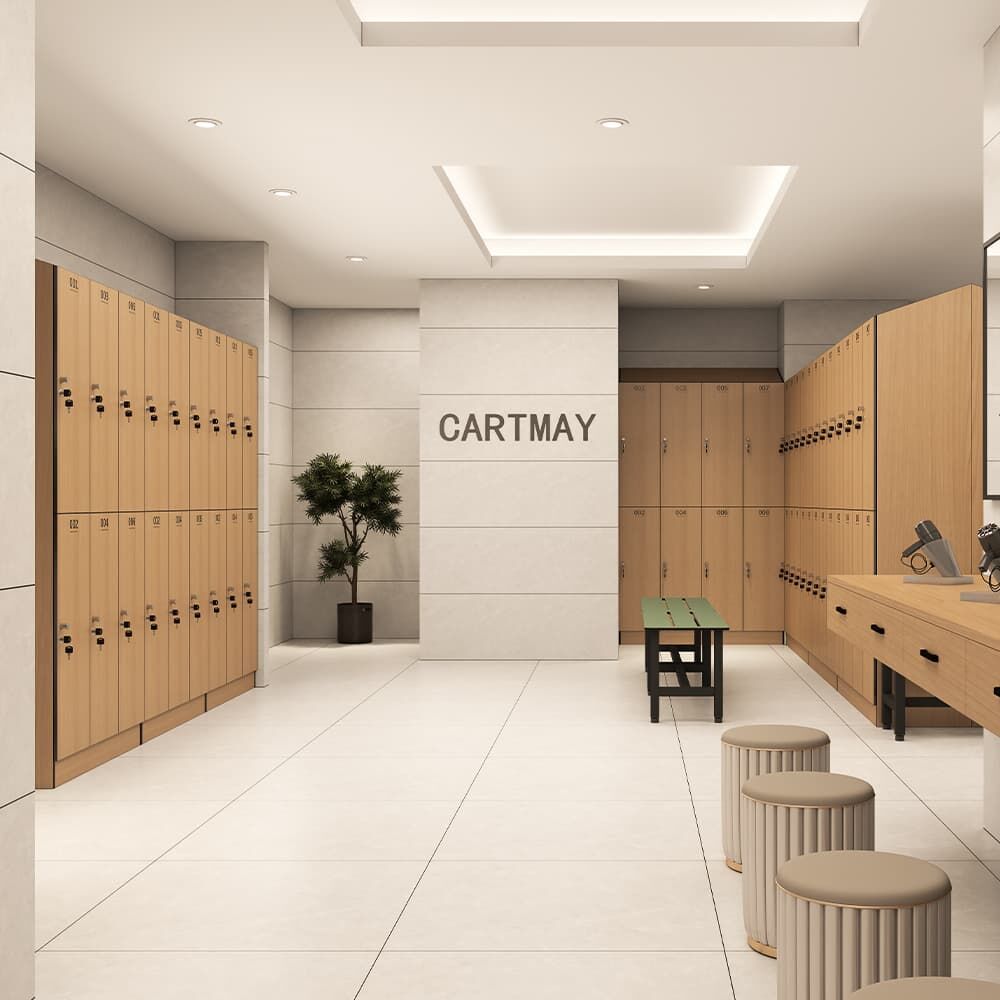
High humidity environments present significant challenges for storage solutions in commercial, educational, and recreational facilities. When moisture levels consistently exceed 60-70%, traditional locker materials such as painted steel, laminated wood, and powder-coated metal begin to deteriorate rapidly through rust formation, warping, delamination, and microbial growth. Phenolic lockers have emerged as the premier solution for moisture-rich environments because their solid core construction and resin-saturated composition create a virtually impervious barrier against water vapor penetration. Understanding how phenolic lockers perform under sustained high humidity conditions requires examining their material science, structural integrity over time, resistance to biological degradation, and real-world performance metrics in challenging installations ranging from coastal school districts to tropical resort facilities.
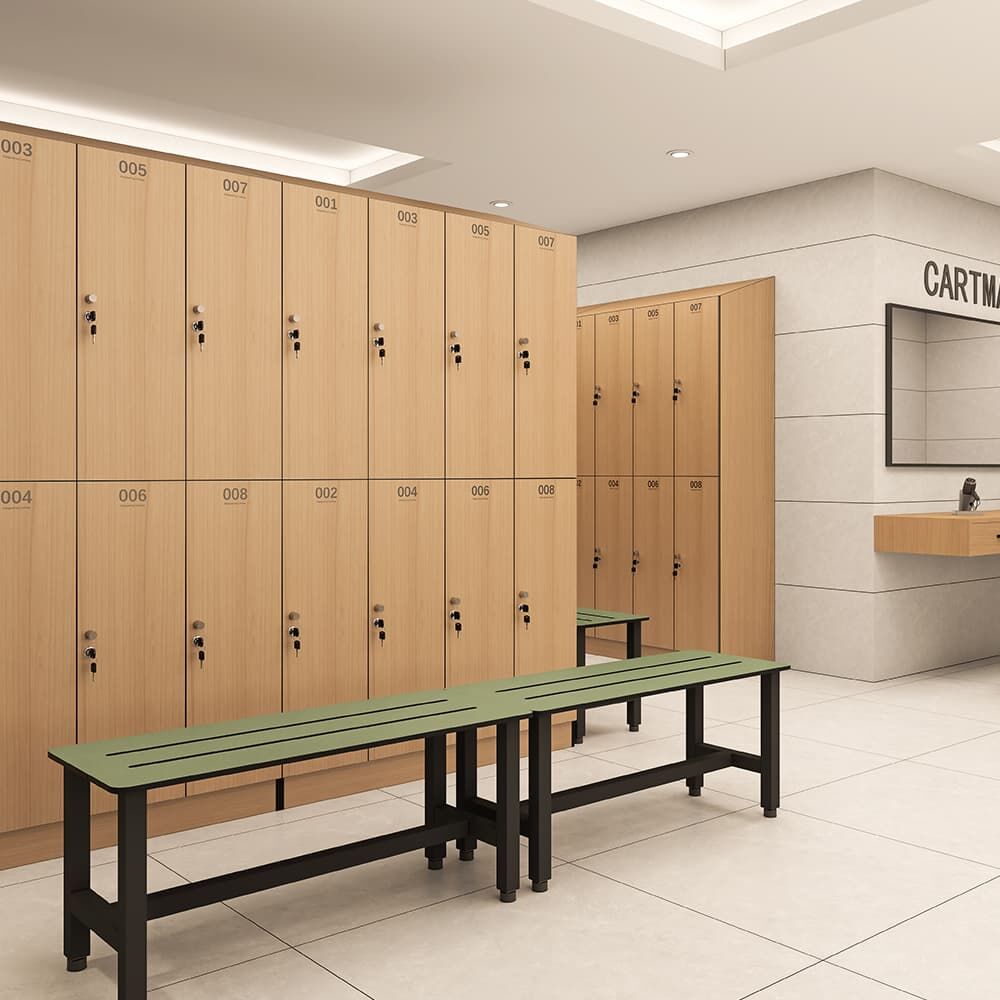
The performance of phenolic lockers in high humidity areas stems from their fundamental material composition and manufacturing process. Unlike surface-treated materials that rely on coatings or barriers, phenolic resin panels are manufactured by saturating multiple layers of kraft paper with thermosetting phenolic resin under extreme heat and pressure, creating a homogeneous solid core that resists moisture throughout its entire thickness. This manufacturing approach means that even if the surface is scratched or abraded, the underlying material maintains identical moisture resistance properties. The dimensional stability, surface integrity, and structural performance of phenolic lockers in consistently humid environments far exceed conventional alternatives, making them the specification standard for aquatic centers, coastal facilities, tropical climates, and any application where relative humidity regularly exceeds seventy percent.
Material Science Behind Moisture Resistance in Phenolic Construction
Thermosetting Resin Matrix and Water Vapor Impermeability
The exceptional humidity performance of phenolic lockers originates from the thermosetting nature of phenolic resin itself. During manufacturing, phenolic resin undergoes an irreversible chemical cross-linking process when exposed to temperatures exceeding 150 degrees Celsius under pressures reaching 1400 pounds per square inch. This curing process creates a three-dimensional molecular network that exhibits extremely low water absorption rates, typically below 0.5% by weight even after prolonged immersion testing. The dense molecular structure prevents water molecules from penetrating between polymer chains, effectively creating a moisture barrier throughout the entire panel thickness rather than relying on surface treatments that can be compromised through wear or damage.
Testing protocols for phenolic lockers include extended exposure to saturated humidity environments at elevated temperatures, simulating decades of use in tropical or aquatic facility conditions. Independent laboratory assessments demonstrate that phenolic panels maintain dimensional stability with less than 0.3% linear expansion when exposed to 95% relative humidity at 50 degrees Celsius for 500 continuous hours. This performance characteristic ensures that locker doors continue to operate smoothly without swelling, warping, or binding even in the most demanding moisture conditions. The resin matrix also prevents moisture from reaching the kraft paper core layers, eliminating the substrate degradation that causes delamination in conventional laminate products.
Surface Density and Capillary Action Prevention
The surface characteristics of phenolic lockers contribute significantly to their humidity performance through density levels that prevent capillary moisture absorption. Manufacturing processes compress the resin-saturated layers to create surface densities exceeding 1.35 grams per cubic centimeter, effectively eliminating the microscopic voids and pores that allow moisture infiltration in less dense materials. This compressed surface structure prevents capillary action, the mechanism by which porous materials draw moisture inward through surface tension forces. Where painted metal lockers develop microscopic coating breaches that allow moisture penetration leading to subsurface rust, and where wood-based lockers absorb atmospheric moisture causing dimensional changes, phenolic lockers maintain surface integrity regardless of ambient humidity levels.
Field performance data from phenolic lockers installed in high humidity environments confirms the practical benefits of this surface density. Facilities management teams report that phenolic installations in natatorium changing areas, tropical climate schools, and coastal recreation centers show no visible deterioration after ten years of continuous exposure to humidity levels regularly exceeding 80%. The non-porous surface prevents moisture accumulation that would otherwise create conditions favorable for mold growth, corrosion initiation, or material degradation. This performance consistency eliminates the maintenance cycles required for repainting, rust treatment, or premature replacement that characterize alternative locker materials in comparable environments.
Through-Color Construction and Damage Tolerance
A critical performance advantage of phenolic lockers in humid environments relates to their through-color construction, where pigmentation is incorporated throughout the resin matrix rather than applied as a surface coating. This manufacturing approach means that surface scratches, impact damage, or abrasion do not expose a different substrate material that might be vulnerable to moisture penetration. The moisture resistance properties remain consistent from the outer surface through the entire panel thickness, providing performance security even in high-traffic applications where surface wear is inevitable. This characteristic proves particularly valuable in educational and recreational facilities where locker surfaces experience regular impact from equipment, bags, and user contact.
Comparative durability testing demonstrates the practical significance of this construction method in humid environments. When phenolic lockers and powder-coated metal lockers both sustain surface scratches in a humid environment, the metal substrate beneath the coating begins oxidizing within days, creating rust bloom that spreads beneath the surrounding coating and accelerates failure. The phenolic material shows no change in performance or appearance at the damage site because the exposed material possesses identical moisture resistance to the original surface. This damage tolerance extends the functional service life of phenolic lockers in demanding applications and eliminates the cascading failure patterns that characterize coated materials in humid conditions.
Structural Performance and Dimensional Stability Under Humidity Stress
Resistance to Hygroscopic Expansion and Door Operation Integrity
The dimensional stability of phenolic lockers under varying humidity conditions directly impacts their functional performance, particularly regarding door operation reliability. Hygroscopic materials absorb atmospheric moisture and expand proportionally to humidity levels, causing doors to bind in frames during humid periods and creating gaps during dry conditions. This cyclical expansion and contraction eventually damages hinge mounting points, warps door panels, and creates operational failures that require maintenance intervention. Phenolic lockers exhibit hygroscopic expansion coefficients below 0.15% across the full range from bone-dry conditions to saturated humidity, ensuring consistent clearances and smooth operation regardless of seasonal or daily humidity fluctuations.
Facility managers in coastal regions and tropical climates consistently report that phenolic lockers maintain operational integrity without requiring seasonal adjustments to door clearances or latch alignments. This performance stability contrasts sharply with wood-based locker systems that often require humidity-season adjustments to prevent binding, and with ventilated metal lockers that can experience frame distortion from differential expansion rates between panel materials and structural framing. The predictable dimensional behavior of phenolic lockers allows for tighter initial tolerances in manufacturing and installation, resulting in better security performance and more refined appearance without sacrificing operational reliability in variable humidity conditions.
Structural Rigidity Maintenance and Panel Deflection Resistance
The structural performance of phenolic lockers in humid environments extends beyond surface moisture resistance to include maintenance of panel rigidity and resistance to deflection under load. Many alternative materials experience strength degradation when exposed to sustained high humidity, as moisture infiltration plasticizes adhesives in laminated construction or reduces fiber strength in wood-based products. Phenolic panels maintain their structural modulus of elasticity without measurable degradation even after years of exposure to saturated humidity conditions, ensuring that shelves support rated loads without sagging and that door panels resist deflection that would compromise latch engagement or create security vulnerabilities.
Engineering testing confirms that phenolic lockers demonstrate consistent load-bearing performance across humidity ranges from 20% to 95% relative humidity. Standardized deflection testing applying 50 pounds of distributed load to horizontal shelving shows less than 2 millimeters of deflection variance across this humidity spectrum, while comparable testing of laminated wood shelving shows deflection increases exceeding 40% when humidity rises from 30% to 85%. This structural consistency ensures that phenolic lockers provide reliable long-term performance without developing the sagging shelves, warped doors, or compromised structural connections that characterize moisture-affected alternatives.
Hardware Integration Points and Fastener Retention
A frequently overlooked aspect of locker performance in humid environments involves the integrity of hardware mounting points and fastener retention over time. Phenolic lockers maintain exceptional fastener holding strength because the dense, homogeneous core material provides consistent grip without the delamination, fiber separation, or substrate degradation that occurs in layered or composite materials exposed to moisture. Hinge mounting screws, latch strike plates, and hook mounting points retain their installation torque specifications indefinitely, eliminating the loosening and operational deterioration that characterizes hardware installations in materials that experience moisture-related degradation.
Long-term field assessments of phenolic lockers in high humidity installations reveal that hardware replacement requirements stem from mechanical wear of the hardware components themselves rather than failure of the mounting substrate. This performance characteristic reduces maintenance requirements and extends service life by preventing the progressive hardware loosening that creates noise, operational problems, and eventual security failures in conventional locker systems. The dimensional stability of phenolic material around fastener penetrations prevents the stress concentration and material creep that develops when substrates experience cyclical expansion from humidity fluctuations, further contributing to hardware longevity and consistent operational performance.
Biological Resistance and Surface Hygiene in Moisture-Rich Environments
Mold and Mildew Growth Prevention
High humidity environments create ideal conditions for biological growth, making mold and mildew resistance a critical performance criterion for locker systems. Phenolic lockers provide inherent resistance to fungal colonization through multiple mechanisms that work synergistically to prevent biological growth even in consistently damp conditions. The non-porous surface prevents moisture accumulation in microscopic surface irregularities where mold spores typically establish initial colonies. The phenolic resin matrix itself is not a nutrient source for biological organisms, eliminating the substrate consumption that supports mold growth on organic materials. Additionally, the chemical composition of cured phenolic resin creates a mildly hostile surface environment that inhibits spore germination and hyphal development.
Laboratory testing using ASTM G21 protocols for fungal resistance demonstrates that phenolic lockers receive the highest resistance ratings when exposed to aggressive mixed fungal cultures under optimal growth conditions of high humidity and moderate temperature. Visual inspection after 28 days of exposure shows no fungal growth on phenolic surfaces, while control samples of painted wood and conventional laminate materials show extensive colonization. This biological resistance translates to significant practical advantages in applications such as pool changing rooms, tropical climate schools, and coastal facilities where mold growth on conventional lockers creates recurring maintenance problems, health concerns, and aesthetic deterioration. The inherent mold resistance of phenolic lockers eliminates the need for antimicrobial coatings that may degrade over time or raise environmental concerns.
Bacterial Colonization Resistance and Cleanability
Beyond fungal resistance, phenolic lockers demonstrate superior performance regarding bacterial colonization resistance in humid environments where condensation and user contact create conditions favorable for bacterial proliferation. The smooth, non-porous surface of phenolic panels prevents bacterial adhesion in the microscopic surface roughness that characterizes many alternative materials. Surface energy characteristics of cured phenolic resin create poor conditions for bacterial biofilm formation, the initial stage of surface colonization that leads to persistent contamination problems. This resistance is particularly valuable in athletic facilities, healthcare-adjacent applications, and educational environments where surface hygiene directly impacts user health and facility sanitation standards.
The cleanability of phenolic lockers in humid environments represents a significant operational advantage, as the non-absorbent surface allows complete removal of contaminants through standard cleaning protocols without harboring residual bacteria in porous substrate materials. Facilities using phenolic lockers in high-humidity athletic changing areas report that routine cleaning with quaternary ammonium or hydrogen peroxide-based disinfectants effectively maintains hygiene standards without requiring the intensive intervention necessary for porous or textured surfaces that trap contaminants. The chemical resistance of phenolic material allows use of stronger disinfecting agents when necessary without damaging the surface or compromising moisture resistance properties, providing flexibility in sanitation protocols that may be restricted for conventional locker materials.
Odor Resistance and Air Quality Impact
Moisture absorption in porous locker materials creates persistent odor problems in high humidity environments, as trapped moisture supports bacterial metabolism that generates volatile organic compounds responsible for characteristic locker room odors. Phenolic lockers eliminate this mechanism by preventing moisture absorption into the substrate material. The non-porous surface does not trap sweat, condensation, or other moisture sources within the material structure, eliminating the anaerobic conditions that support odor-producing bacterial activity. This characteristic proves especially valuable in poorly ventilated spaces or in facilities where high user volume creates challenging humidity and contamination loads.
Facility managers consistently report that changing areas equipped with phenolic lockers maintain better air quality and require less aggressive ventilation compared to spaces with conventional lockers in equivalent use conditions. The lack of internal moisture retention means that phenolic lockers dry quickly after exposure to humid conditions or surface condensation, preventing the persistent dampness that characterizes absorbent materials. This quick-drying characteristic reduces the environmental moisture load within locker rooms, potentially allowing for reduced HVAC capacity requirements while maintaining acceptable humidity levels and air quality. The absence of trapped moisture also prevents the gradual accumulation of contamination that creates intensifying odor problems over time in conventional locker installations.
Real-World Performance Data from High Humidity Installations
Coastal Facility Applications and Salt Air Exposure
Coastal installations provide demanding real-world testing conditions for phenolic lockers, combining high humidity with salt air exposure that accelerates corrosion of metal components and degrades many protective coatings. Schools, recreation centers, and hospitality facilities in coastal regions report that phenolic lockers maintain appearance and function for fifteen years or more without exhibiting the rust staining, surface deterioration, or structural degradation that characterizes metal lockers in comparable environments. The performance advantage becomes particularly evident in facilities within one kilometer of saltwater, where atmospheric salt concentration creates aggressive corrosive conditions that can reduce conventional locker service life to five years or less before major maintenance or replacement becomes necessary.
Documentation from coastal facilities demonstrates that phenolic lockers eliminate the recurring maintenance cycles associated with rust remediation, surface refinishing, and premature component replacement. A high school in a Gulf Coast community reported that replacement of 400 metal lockers with phenolic units reduced locker-related maintenance labor by 85% over a five-year period while eliminating the appearance deterioration that had created negative impressions during parent visits and student recruitment activities. The resistance of phenolic lockers to salt air extends to hardware components when stainless steel fasteners and hinges are specified, creating a complete system solution for corrosive coastal environments where material selection critically impacts long-term cost of ownership.
Natatorium and Aquatic Center Performance
Aquatic facilities represent the most demanding humidity environment for locker systems, with changing areas adjacent to pool spaces regularly experiencing relative humidity above 85% combined with elevated temperatures and chlorine vapor exposure. Phenolic lockers have become the specified standard for natatorium changing rooms because they demonstrate consistent performance under these extreme conditions. Pool facility managers report that phenolic installations show no degradation after ten years of continuous exposure to conditions that would destroy wood-based lockers within three years and create severe corrosion problems in metal lockers within five years.
The chemical resistance of phenolic lockers provides an additional performance advantage in aquatic applications, as chlorine vapor and sanitizer overspray do not degrade the surface or compromise moisture resistance properties. A university recreation center with an Olympic-size natatorium documented that phenolic lockers in the pool changing area maintained like-new appearance and function after eight years of continuous use, while metal lockers in a separate changing area serving dry-side activities showed significant wear and early rust formation despite much less demanding environmental conditions. This performance differential validated the initial investment in phenolic material and led to specification of phenolic lockers for a facility expansion project despite higher initial cost compared to metal alternatives.
Tropical Climate Educational Facilities
Educational institutions in tropical and subtropical regions face chronic humidity challenges that impact building materials and furnishings throughout the year. Schools in Southeast Asia, Central America, and tropical Pacific regions report that phenolic lockers provide reliable fifteen-year service life with minimal maintenance, contrasting sharply with three-to-five-year replacement cycles for wood-based and metal locker systems in equivalent conditions. The elimination of rust staining on floors and walls adjacent to lockers represents a significant collateral benefit, as leaching rust from corroding metal lockers creates staining that damages finished surfaces and requires costly remediation.
An international school in a tropical Asian location documented comprehensive performance data comparing phenolic lockers installed in a new building wing against existing metal lockers in older sections of the campus. After four years of parallel operation, the metal lockers showed surface rust on 73% of units, required hinge replacement on 31% of doors due to corrosion-related failure, and exhibited surface coating delamination on 45% of panels. The phenolic lockers showed zero maintenance requirements beyond routine cleaning and demonstrated no functional or aesthetic degradation. This documented performance justified campus-wide conversion to phenolic material during subsequent renovation projects, with administrators citing both immediate maintenance savings and projected long-term replacement cost avoidance as economic drivers supporting the material selection.
Specification Considerations for High Humidity Applications
Panel Thickness and Performance Durability Relationship
While all phenolic lockers provide superior humidity resistance compared to alternative materials, panel thickness influences long-term durability and structural performance in demanding applications. Standard phenolic locker construction utilizes 12-millimeter panels for doors and internal components, providing excellent moisture resistance and adequate structural performance for most applications. High-traffic environments with sustained extreme humidity may justify specification of 13-millimeter or 15-millimeter panels that offer enhanced impact resistance and increased structural rigidity, though moisture resistance performance remains essentially equivalent across this thickness range due to the homogeneous nature of phenolic material.
The decision regarding panel thickness should consider the complete service environment rather than humidity alone. Facilities with combined challenges of high humidity, heavy user traffic, and potential impact exposure benefit from thicker panel specifications that provide additional durability margin. A coastal university recreation center specified 15-millimeter phenolic lockers for changing rooms serving both the natatorium and fitness center, reasoning that the combination of extreme humidity and heavy student use justified the enhanced impact resistance of thicker panels. After six years of operation, this specification decision proved sound, as the lockers maintained excellent appearance despite intensive use conditions that would have caused visible wear in standard-thickness panels.
Hardware Selection for Corrosive Humid Environments
The performance of phenolic lockers in high humidity environments can be compromised by corrosion of hardware components if inappropriate materials are specified. Standard zinc-plated steel hinges and latches suitable for climate-controlled interior applications will corrode in sustained high humidity environments, particularly in coastal areas where salt air accelerates oxidation. Optimal hardware specifications for humid environments include Type 304 stainless steel hinges, latches, and fasteners that provide corrosion resistance matching the durability of phenolic panels. While stainless hardware increases initial cost by approximately twelve to fifteen percent compared to standard plated steel components, the elimination of premature hardware failure and associated maintenance costs provides clear long-term economic advantage.
Alternative hardware materials including coated aluminum and marine-grade plastics offer intermediate solutions for budget-constrained projects in moderately humid environments. A coastal community center specified aluminum cam latches and nylon hinges for phenolic lockers serving changing rooms with good ventilation and moderate humidity levels. This specification provided satisfactory performance at lower cost than stainless steel hardware, though facility managers noted that annual inspection and occasional component replacement maintained performance standards. The key principle is matching hardware durability to the expected service environment and ensuring that hardware does not become the failure mode that limits system service life despite excellent performance of the phenolic panels themselves.
Ventilation Design Integration and Condensation Management
While phenolic lockers resist moisture-related degradation, thoughtful integration with facility ventilation systems optimizes overall performance and user satisfaction in high humidity environments. Locker designs incorporating ventilation louvers in doors and sidewalls allow air circulation that reduces internal humidity and accelerates drying of damp contents. The moisture resistance of phenolic material allows specification of larger ventilation openings compared to materials vulnerable to moisture exposure at cut edges, providing enhanced air circulation without compromising structural integrity. Strategic placement of supply air diffusers and exhaust intakes relative to locker banks reduces surface condensation that can occur when cold locker surfaces contact humid air in poorly designed ventilation systems.
A recreation facility in a humid subtropical climate worked with mechanical engineers to optimize ventilation specifically for phenolic locker performance. The design located supply diffusers to create gentle air movement across locker faces, reducing surface condensation without creating uncomfortable drafts in the changing area. Exhaust registers placed near ceiling level removed humid air before it could settle into lower locker tiers. This integrated approach combined the inherent moisture resistance of phenolic lockers with active humidity control to create an optimal environment. Facility staff reported that users perceived the changing area as more comfortable compared to a previous facility with comparable humidity levels but poor ventilation design, demonstrating that material selection and system design work synergistically to optimize performance.
FAQ
Do phenolic lockers require special maintenance in high humidity environments?
Phenolic lockers require only routine cleaning in high humidity environments and do not need special maintenance treatments such as rust prevention, surface sealing, or moisture barrier application. Standard cleaning with mild detergent or disinfectant solutions maintains appearance and hygiene. The moisture resistance is inherent to the material composition rather than dependent on applied coatings or treatments. Hardware should be inspected periodically and stainless steel components specified initially will provide maintenance-free corrosion resistance matching the durability of the phenolic panels.
How long do phenolic lockers last in tropical or coastal environments?
Phenolic lockers typically provide fifteen to twenty years of service life in tropical and coastal high-humidity environments when properly specified with corrosion-resistant hardware. This service life represents two to three times the longevity of powder-coated metal lockers and three to four times the expected life of wood-based alternatives in comparable conditions. The actual service life depends on user traffic intensity, cleaning practices, and whether appropriate stainless steel hardware was specified, but the phenolic panels themselves show no humidity-related degradation that would force replacement within typical building service life expectations.
Can phenolic lockers be installed directly against exterior walls in humid climates?
Phenolic lockers can be installed against exterior walls in humid climates without risk of moisture damage to the locker material itself, though consideration should be given to condensation potential on cold exterior walls during humid conditions. The moisture resistance of phenolic material protects the lockers regardless of wall surface conditions, but persistent condensation on walls can create unsanitary conditions and potentially damage adjacent building materials. Best practice includes ensuring adequate wall insulation to prevent interior surface condensation, maintaining space between the locker back and wall for air circulation, and confirming that building envelope design prevents moisture intrusion that would create problems independent of locker material selection.
Are phenolic lockers more expensive than alternatives for high humidity applications?
Phenolic lockers have higher initial purchase costs than painted metal lockers, typically thirty to fifty percent more depending on configuration and hardware specifications. However, total cost of ownership analysis consistently favors phenolic material in high humidity applications when maintenance costs, service life, and replacement frequency are considered. Facilities in demanding humid environments report that phenolic lockers eliminate the recurring refinishing, rust treatment, and premature replacement costs that characterize metal alternatives, with lifecycle cost analysis typically showing twenty to thirty percent lower total costs over a fifteen-year period despite higher initial investment. The cost advantage increases in more aggressive environments where metal locker service life may be limited to five years or less.
Table of Contents
- Material Science Behind Moisture Resistance in Phenolic Construction
- Structural Performance and Dimensional Stability Under Humidity Stress
- Biological Resistance and Surface Hygiene in Moisture-Rich Environments
- Real-World Performance Data from High Humidity Installations
- Specification Considerations for High Humidity Applications
-
FAQ
- Do phenolic lockers require special maintenance in high humidity environments?
- How long do phenolic lockers last in tropical or coastal environments?
- Can phenolic lockers be installed directly against exterior walls in humid climates?
- Are phenolic lockers more expensive than alternatives for high humidity applications?