 EN
EN


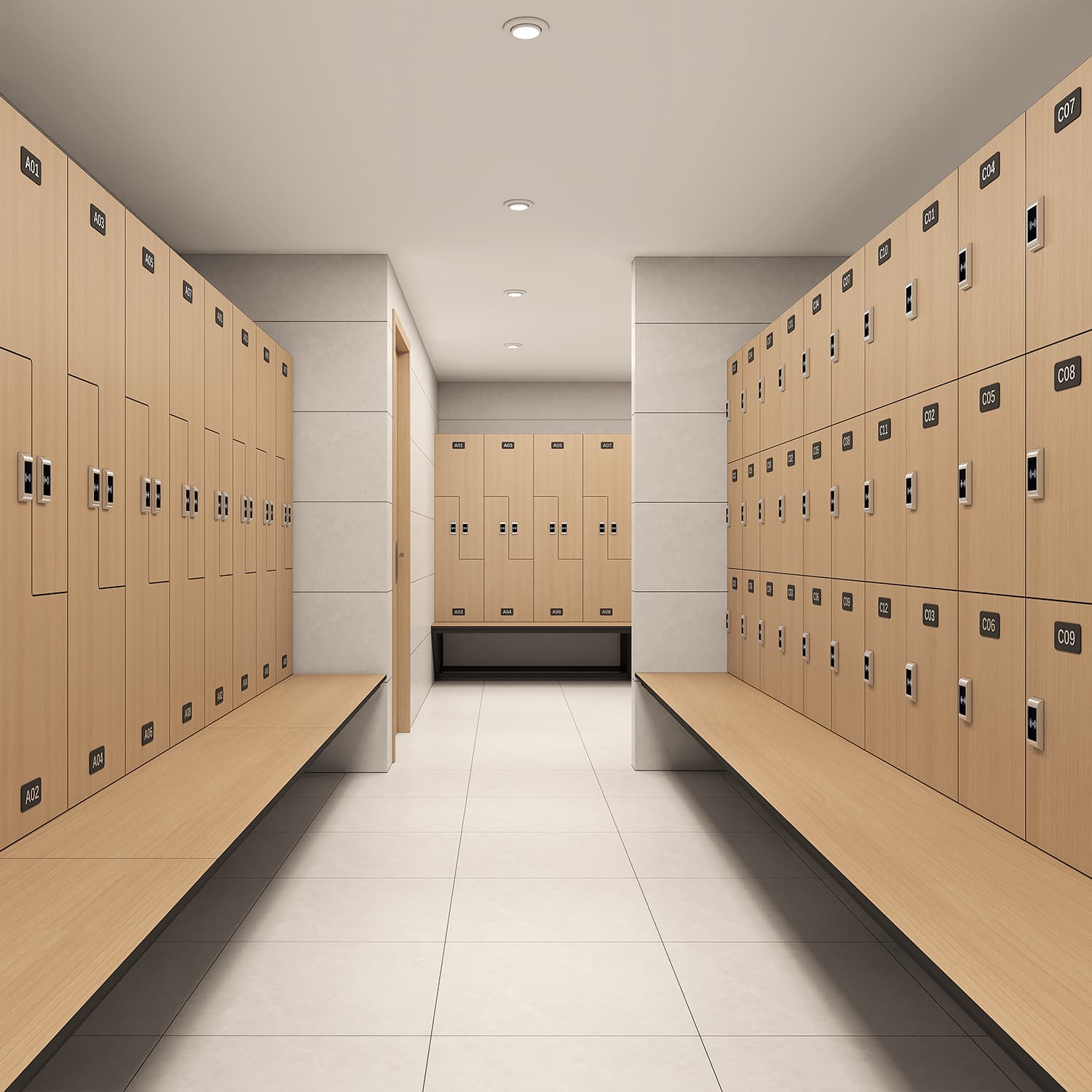
When a project demands precision, durability, and brand-specific design, partnering with a dedicated HPL Locker Factory becomes essential. An HPL Locker Factory does not simply produce standard storage units off a production line. It works directly with buyers, architects, and facility managers to engineer locker systems that meet exact OEM specifications — from panel thickness and color finish to door configuration and locking mechanism. This level of customization is what separates a true HPL Locker Factory from a generic furniture supplier.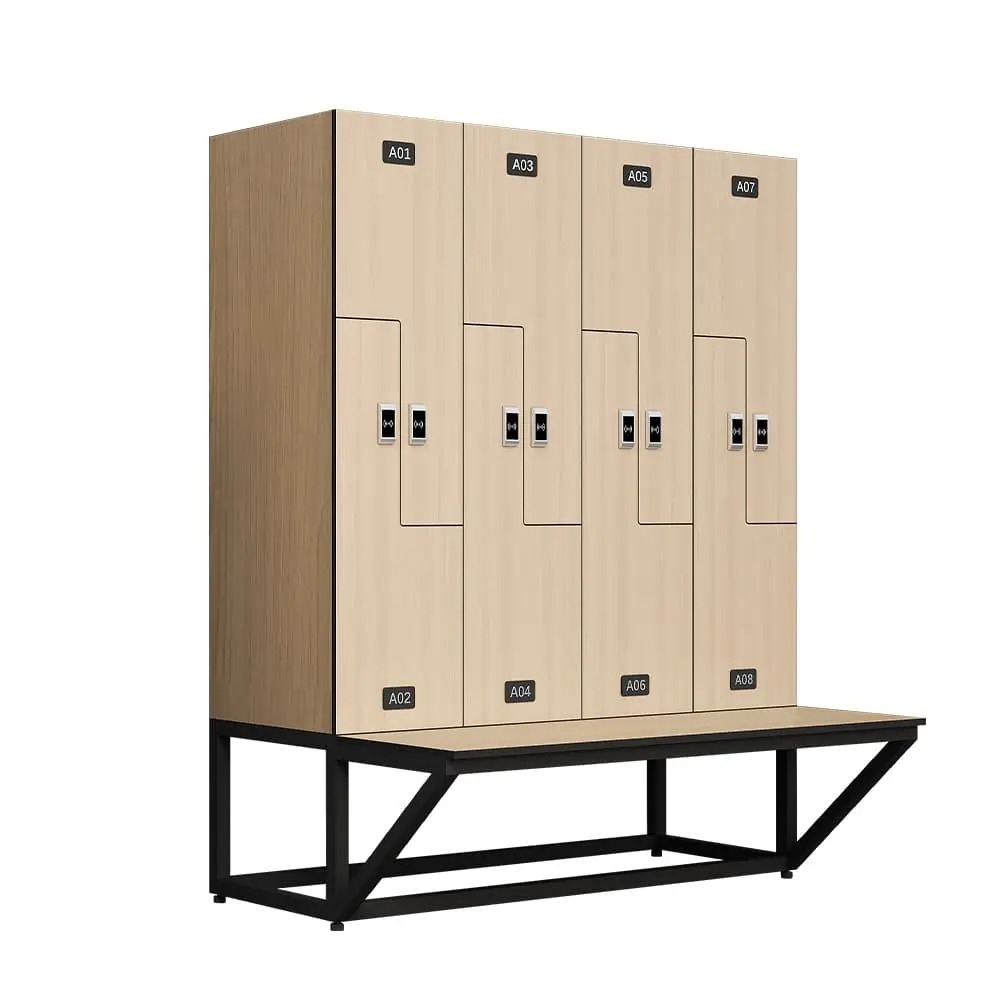
Every HPL Locker Factory operates around high-pressure laminate as its core surface material, prized for its resistance to moisture, impact, and daily wear, bonded to a substrate core of particleboard, plywood, or medium-density fiberboard (MDF) depending on the application. Whether the end application is a sports facility changing room, a school corridor, or a corporate wellness center, the HPL Locker Factory must translate client briefs into manufacturable, code-compliant products. Understanding how an HPL Locker Factory approaches OEM specifications helps buyers make smarter procurement decisions and avoid costly revisions down the line.
What OEM Customization Means at an HPL Locker Factory
Defining OEM Scope in Locker Manufacturing
OEM, or original equipment manufacturer, customization at an HPL Locker Factory refers to the process of producing locker units built entirely to a client's design brief rather than a factory's catalog. The HPL Locker Factory receives dimensional drawings, finish specifications, hardware preferences, and branding requirements, then engineers a production-ready solution around those inputs. This is fundamentally different from selecting a locker from a brochure. At an HPL Locker Factory, the client's specification becomes the product blueprint, and every downstream manufacturing decision traces back to that brief.
For large-scale projects, the HPL Locker Factory may also assist with DFM, or design for manufacturability, reviews. This ensures that the OEM specification can be produced efficiently without compromising structural integrity. A reliable HPL Locker Factory will flag potential tolerance issues, suggest material substitutions where necessary — such as recommending plywood over particleboard for higher-load applications — and provide physical samples before full production begins. This collaborative process is what gives OEM procurement from an HPL Locker Factory its value.
Key Specification Parameters the Factory Handles
An HPL Locker Factory typically manages a wide range of custom parameters. Panel thickness is a foundational choice, with most factories offering compact laminate panels ranging from 12mm to 20mm depending on load-bearing requirements, and a corresponding choice of particleboard, plywood, or MDF as the core substrate. Color and texture are selected from laminate manufacturer collections, and an HPL Locker Factory with strong supplier relationships can access a broader palette. Door styles, including full-door, half-door, and tiered configurations, are all within scope for an experienced HPL Locker Factory. Ventilation slot patterns, internal shelf placement, and coat hook positioning can each be adjusted per the OEM brief.
How an HPL Locker Factory Supports Project-Specific Requirements
Industry Applications Driving Custom Demand
The demand for OEM customization from an HPL Locker Factory is driven by a diverse set of end-use environments. Gym and athletic facility operators require lockers that resist humidity and chlorine residue from adjacent pool areas, making the moisture-resistant properties of an HPL Locker Factory's output especially relevant. Schools and universities often need lockers sized for specific corridor widths, requiring the HPL Locker Factory to adapt modular dimensions without compromising structural performance. Corporate offices and hospitality venues seek aesthetic alignment with interior design schemes, which means the HPL Locker Factory must offer consistent color matching and premium surface finishes.
Healthcare facilities represent another growing segment for HPL Locker Factory production. Infection control requirements demand non-porous surfaces and sealed edges, both of which an HPL Locker Factory can engineer into standard OEM production runs. When clients provide detailed hygiene specifications, the HPL Locker Factory adapts edge-banding techniques and panel sealing methods accordingly. This responsiveness across sectors is what makes the HPL Locker Factory model so commercially viable.
Lead Times, Sampling, and Production Milestones
A structured HPL Locker Factory will map out a clear production timeline for each OEM project. Initial engineering review at the HPL Locker Factory typically takes one to two weeks, after which sample units are fabricated for client approval. Once samples pass sign-off, the HPL Locker Factory schedules bulk production based on agreed delivery windows. For international buyers, the HPL Locker Factory also coordinates export packaging, container loading plans, and documentation for customs clearance. Transparent milestone communication is a mark of a professional HPL Locker Factory and reduces project risk significantly.
Evaluating an HPL Locker Factory for OEM Capability
Technical and Quality Indicators
Not every supplier that labels itself an HPL Locker Factory possesses genuine OEM capability. Buyers should assess whether the HPL Locker Factory holds relevant certifications, such as ISO quality management standards or compliance with fire and safety regulations applicable in the destination market. A capable HPL Locker Factory will have in-house CNC cutting equipment, edge-banding lines, and assembly jigs calibrated to tight tolerances. Requesting a factory audit or third-party inspection report is a reasonable step when qualifying an HPL Locker Factory for a high-value project.
Material traceability is another important indicator. A trustworthy HPL Locker Factory should be able to identify the laminate grade, substrate type (particleboard, plywood, or MDF), and hardware specification used in any given production batch. This matters for warranty management and future reorder consistency. If an HPL Locker Factory cannot provide material data sheets or batch records, that is a signal to look for an alternative HPL Locker Factory with stronger quality documentation practices.
Communication and Design Support
Beyond machinery, the HPL Locker Factory's commercial and design team plays a central role in OEM success. Buyers benefit from working with an HPL Locker Factory that assigns a dedicated project coordinator who understands both manufacturing constraints and client expectations. Drawing review, spec clarification, and change management should all be handled promptly by the HPL Locker Factory. When the HPL Locker Factory proactively communicates potential issues rather than waiting for problems to escalate, the overall project outcome improves for all parties. Strong communication at the HPL Locker Factory level shortens revision cycles and keeps production on schedule.
FAQ
What materials does an HPL Locker Factory typically use for OEM production?
An HPL Locker Factory primarily uses high-pressure laminate panels, also called compact laminate, as the surface material, bonded to a core substrate of particleboard, plywood, or medium-density fiberboard (MDF). These laminate surfaces are manufactured by bonding multiple layers of resin-impregnated kraft paper under high pressure and heat, resulting in a dense, moisture-resistant finish. The HPL Locker Factory selects panel thickness, substrate type, surface texture, and color based on the client's OEM brief, and pairs the panels with durable, corrosion-resistant hardware suited to the application environment.
How long does it take for an HPL Locker Factory to fulfill a custom OEM order?
Lead times at an HPL Locker Factory vary based on order complexity and volume. A standard OEM run at an HPL Locker Factory typically takes four to eight weeks from approved sample to finished goods, not including shipping transit time. More complex configurations requiring special laminates, non-standard substrates, or custom hardware may extend the HPL Locker Factory's production schedule. Buyers are advised to confirm timelines in writing with the HPL Locker Factory before committing to installation dates.
Can an HPL Locker Factory accommodate small OEM pilot orders before full production?
Yes, most established HPL Locker Factory operations offer pilot or sample production runs for OEM clients. These initial units allow the buyer to verify dimensions, finish quality, and hardware performance before committing to full production volumes. The HPL Locker Factory may charge a higher per-unit cost for pilot runs due to setup time, but this investment reduces the risk of large-scale specification errors. Confirming the HPL Locker Factory's minimum order quantity for pilot versus bulk production upfront is a recommended procurement practice.


