 EN
EN


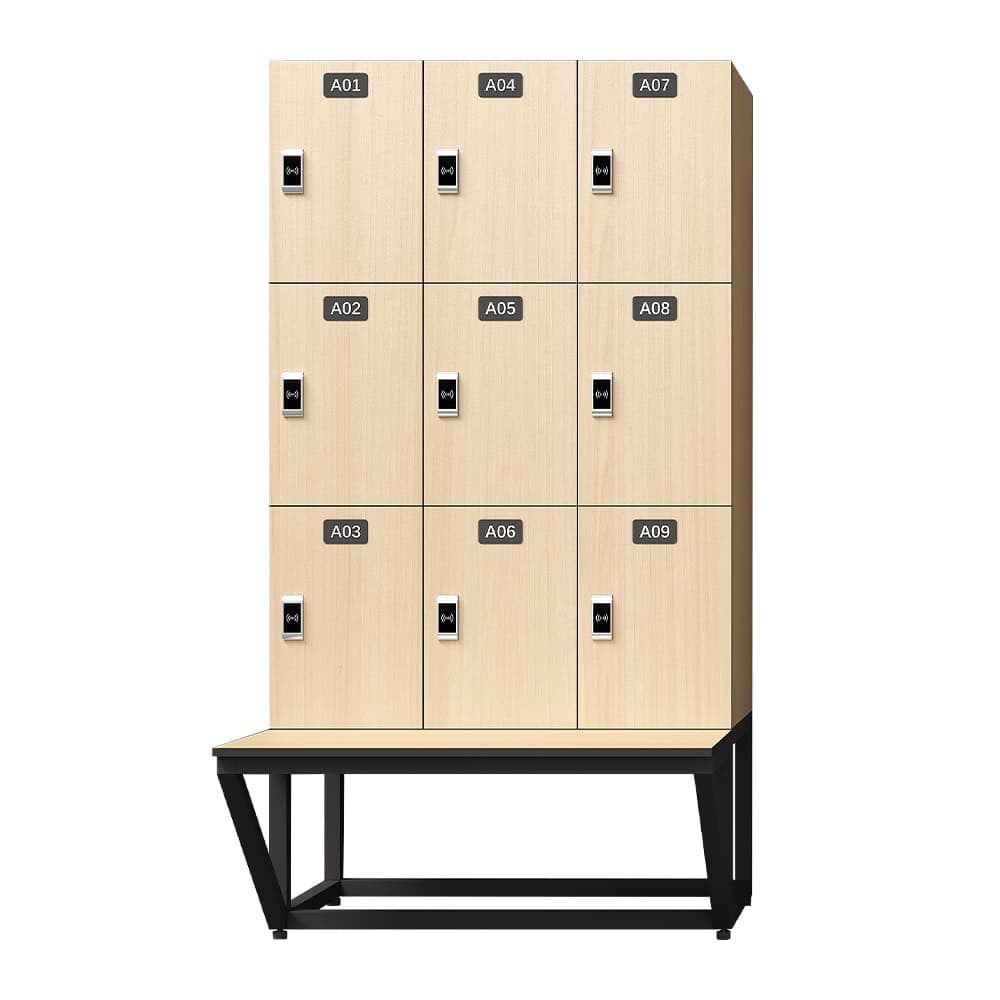
Choosing the right HPL Locker Factory is one of the most consequential decisions a B2B buyer can make heading into 2026. Whether you are outfitting a gym, school, hospital, or corporate office, the HPL Locker Factory you partner with will directly determine product durability, delivery reliability, and long-term cost efficiency. The market for compact laminate lockers has grown considerably, and that growth means more options but also more risk if sourcing decisions are made without a structured evaluation process.
This guide is designed for procurement managers, facility operators, and commercial buyers who need reliable, practical guidance when evaluating an HPL Locker Factory for bulk orders in 2026. We will cover what defines a credible HPL Locker Factory, how to assess production capability and material standards, and how to navigate common sourcing challenges. Every section is built around helping you reduce procurement risk and secure consistent quality at a competitive price.
What Defines a Credible HPL Locker Factory
Material Standards and Production Infrastructure
A credible HPL Locker Factory begins with its raw material sourcing. High-pressure laminate, commonly known as HPL, is the defining surface component of these lockers, and not all HPL panels are equal. Behind the laminate face, the core substrate matters just as much — reputable factories build on moisture-resistant particleboard, plywood, or medium-density fiberboard (MDF), each offering a different balance of weight, screw-holding strength, and cost. A serious HPL Locker Factory will use panels that meet recognized standards for moisture resistance, impact resistance, and surface hardness. When evaluating any HPL Locker Factory, ask specifically about the HPL panel grade, the core substrate (particleboard, plywood, or MDF), thickness tolerances, and whether the factory conducts incoming material inspections before production begins.
Production infrastructure matters just as much as material inputs. A well-equipped HPL Locker Factory will operate CNC cutting machinery, edge-banding lines, and automated assembly stations to ensure dimensional accuracy and finish consistency across large batch orders. Visiting the facility in person or requesting a detailed factory audit report are both valid methods for confirming whether the HPL Locker Factory has the physical capacity to fulfill your order at the required quality level and timeline.
Certifications and Compliance Capacity
Certifications are a reliable proxy for factory discipline. A trustworthy HPL Locker Factory should hold at minimum an ISO 9001 quality management certification, and for markets with strict environmental standards, certifications related to formaldehyde emissions and material safety are equally important — this is especially relevant given the wood-based composite cores (particleboard, plywood, or MDF) used beneath the laminate surface. If you are sourcing for a school or healthcare environment, confirming that the HPL Locker Factory can supply documentation aligned with local building and safety codes is not optional. Compliance capacity separates a professional HPL Locker Factory from a low-cost assembler that may cut corners on material safety.
Evaluating Production Capability for B2B Orders
Minimum Order Quantities and Lead Times
B2B procurement for lockers typically involves significant quantities, and understanding the minimum order quantity structure of an HPL Locker Factory is a foundational step. Some factories specialize in high-volume standardized production, while others offer more flexibility for customized configurations. The right HPL Locker Factory for your project depends on whether your requirements align with the factory's core production model. A mismatch here often results in inflated unit costs or extended lead times that disrupt project schedules.
Lead time reliability is another critical dimension. An HPL Locker Factory that consistently delivers within the committed window demonstrates operational maturity. Request references from past B2B clients when possible, and ask each HPL Locker Factory to provide realistic lead time estimates based on your specific order size and configuration. Vague timelines are a warning sign that the HPL Locker Factory may be over-committing to multiple clients simultaneously.
Customization Depth and Design Flexibility
Modern B2B buyers rarely want a one-size-fits-all product. A capable HPL Locker Factory should be able to accommodate custom sizes, color options, locking mechanisms, and ventilation configurations, along with the option to select particleboard, plywood, or MDF as the core substrate depending on load requirements and budget. The depth of customization offered by an HPL Locker Factory reflects both its engineering capability and its willingness to invest in client-specific tooling. When requesting quotations, describe your exact specifications clearly and evaluate how thoroughly each HPL Locker Factory responds to the technical details of your inquiry.
Color and surface finish flexibility also matter in commercial environments where branding and interior design standards apply. A sophisticated HPL Locker Factory will maintain an extensive laminate decor library and will be able to match specific color references upon request. This level of design responsiveness is a strong indicator that the HPL Locker Factory is oriented toward serving serious B2B clients rather than only the commodity market.
Key Sourcing Risks and How to Manage Them
Quality Inconsistency Across Production Batches
One of the most persistent challenges in sourcing from an HPL Locker Factory is maintaining consistent quality across multiple production batches. Even when a first shipment meets specifications, subsequent orders from the same HPL Locker Factory may show variation in panel thickness, edge finish, or hardware quality if the factory does not apply rigorous in-process quality controls. To mitigate this risk, establish clear product specifications in writing before placing any order — including the exact core substrate (particleboard, plywood, or MDF) and HPL grade — and require the HPL Locker Factory to provide inspection reports and pre-shipment photos for every batch.
Third-party inspection services offer an additional layer of protection when sourcing from a new HPL Locker Factory. Engaging an independent inspector to verify product conformance before shipment is a low-cost investment relative to the financial exposure of receiving a non-conforming batch. Building inspection clauses into your purchase agreement with any HPL Locker Factory ensures that quality accountability is formalized from the outset of the relationship.
Communication and After-Sales Support
Communication quality is often underestimated when evaluating an HPL Locker Factory. A factory that responds promptly, provides clear technical documentation, and proactively raises potential production issues is far easier to work with than one that offers lower prices but poor responsiveness. Test the communication responsiveness of any HPL Locker Factory during the inquiry stage. How a factory handles questions before a contract is signed closely predicts how it will handle issues after production begins.
After-sales support, including warranty terms, replacement part availability, and technical assistance, is another dimension that distinguishes a reliable HPL Locker Factory from a transactional vendor. For large-scale installations, replacement panels or hardware components may be needed months or years after the initial delivery. Confirm that the HPL Locker Factory maintains a service commitment that extends beyond the sale itself.
FAQ
What materials should a quality HPL Locker Factory use?
A quality HPL Locker Factory should use high-pressure laminate surface panels built on a moisture-resistant core — typically particleboard, plywood, or medium-density fiberboard (MDF), depending on the application and load requirements. Panel thickness typically ranges from 10mm to 13mm depending on the configuration. The HPL Locker Factory should also fit durable, corrosion-resistant hardware — including hinges, locks, and handles — rated for high-traffic commercial use, and should be able to confirm low-formaldehyde-emission compliance for the substrate material.
How do I verify that an HPL Locker Factory can handle large B2B orders?
Request a factory audit report or arrange an on-site visit to assess the production line capacity of the HPL Locker Factory. Ask for references from clients with comparable order volumes, and review the factory's equipment list, workforce size, and monthly production output figures. An established HPL Locker Factory will be transparent about its capacity limits and will provide realistic lead time commitments based on current production schedules.
What certifications should I require from an HPL Locker Factory?
At minimum, require ISO 9001 certification from any HPL Locker Factory you consider. Depending on your target market, you may also need documentation covering formaldehyde emission compliance for the substrate (particleboard, plywood, or MDF), fire resistance ratings, or regional safety standards. A professional HPL Locker Factory will have these documents readily available and will understand the compliance requirements of major export markets without needing extensive prompting.


