 EN
EN


Architects and facility designers face a perennial challenge: specifying storage solutions that satisfy both aesthetic vision and functional rigor. In commercial, institutional, and industrial environments, lockers must endure constant use, resist moisture and impacts, and maintain a professional appearance for decades. This is why a growing number of design professionals are turning to industrial wood grain HPL lockers.
Combining the visual warmth of natural timber with the engineered resilience of High-Pressure Laminate (HPL) bonded to substrates like particleboard, plywood, and Medium-Density Fiberboard (MDF), hpl lockers deliver architectural credibility without compromising on durability. This guide explores the technical and design rationale behind specifying hpl lockers in today's most demanding projects.
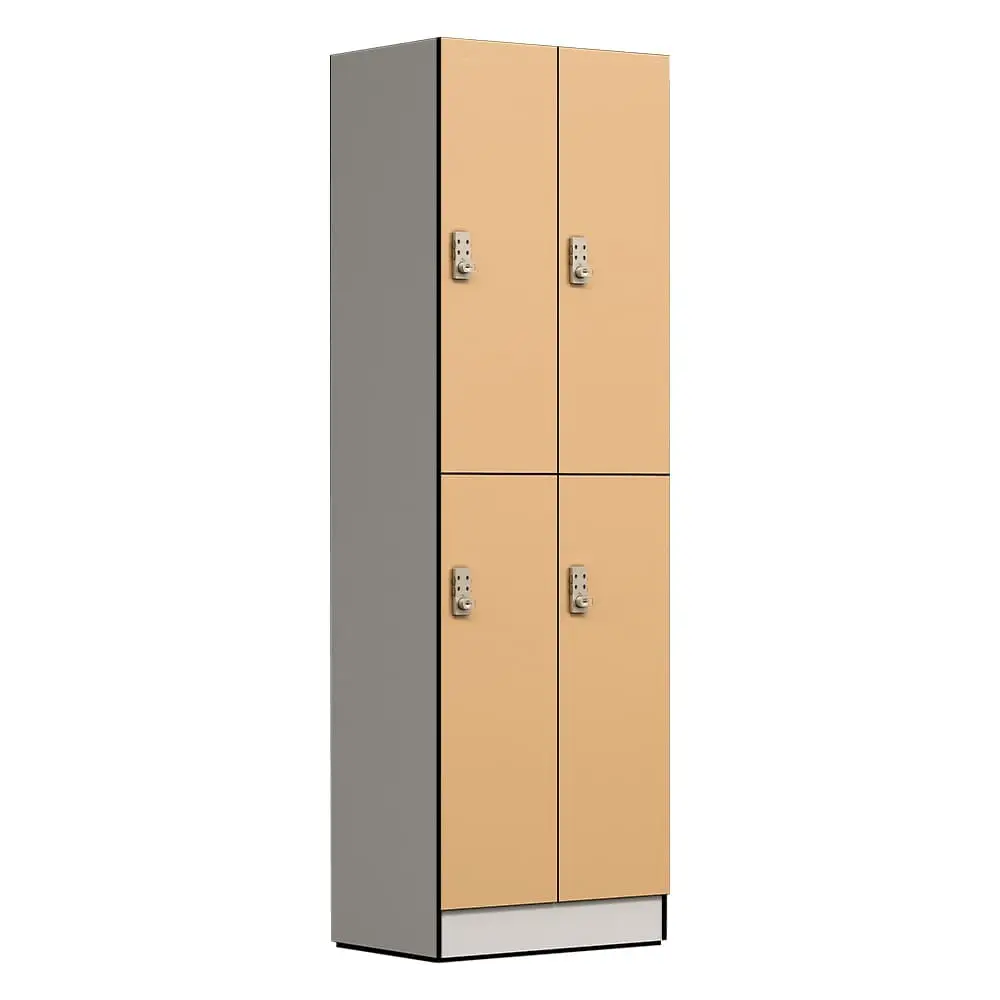
The Architectural Imperative: Beauty That Performs
Contemporary interior design increasingly emphasizes material authenticity, biophilic connections, and human-centered spaces. However, natural materials often fall short in high-traffic settings. Solid wood warps, swells,and requires frequent refinishing; other alternatives may lack the structural integrity needed for institutional use.
Industrial wood grain HPL lockers resolve this paradox. The high-pressure laminate surface replicates the grain, texture, and warmth of premium timber—from light oak and natural walnut to deep cherry and modern white oak—while providing industrial-grade protection against moisture, scratches, impacts, and chemical exposure.
Architects specify hpl lockers because they enable design continuity across diverse facility types: fitness centers, educational campuses, corporate offices, healthcare environments, and industrial workplaces. The result is a cohesive, inviting atmosphere that enhances user experience and reinforces brand identity.
Engineered for Longevity: Material Science Behind HPL Lockers
Superior Resistance to Moisture and Environmental Stress
Facilities like gyms, pool areas, and humid industrial zones demand storage systems that resist water infiltration and dimensional changes. HPL lockers are manufactured by compressing multiple layers of kraft paper impregnated with thermosetting resins under extreme heat and pressure. This creates a dense, non-porous surface that prevents moisture absorption—a common failure point for solid wood or low-grade composites.
The engineered wood cores—particleboard, plywood, and MDF—provide structural stability and screw-holding strength, ensuring that hpl lockers remain rigid and functional even in fluctuating humidity levels. Unlike materials that swell, delaminate, or harbor mold, wood grain hpl lockers maintain their integrity for 10 to 15 years or more with minimal maintenance.
Impact, Scratch, and Chemical Resistance
Institutional environments are unforgiving. Lockers are subjected to accidental impacts, sharp objects, cleaning chemicals, and daily wear. HPL lockers meet rigorous international standards (including ISO 4586 for high-pressure decorative laminates) for:
Scratch and abrasion resistance – preserving the wood grain finish through thousands of use cycles.
Impact resistance – absorbing shocks without denting or surface fracture.
Chemical resistance – repelling sweat, sunscreen, cosmetics, and industrial cleaners that permanently stain or degrade lesser materials.
This resilience translates directly into lower maintenance costs, reduced replacement frequency, and predictable lifecycle expenses—critical factors for facility operators and institutional budgets.
Design Flexibility: Customization Without Compromise
Wood Grain Finishes for Every Design Palette
One of the most compelling reasons architects choose hpl lockers is the extensive range of wood grain finishes available. From light Scandinavian oaks to rich mahogany and contemporary gray-washed textures, wood grain hpl lockers coordinate seamlessly with:
Flooring materials (timber, tile, carpet).
Wall finishes and millwork.
Furniture and joinery.
Overall interior design narratives.
This versatility allows hpl lockers to serve as integrated design elements rather than purely utilitarian afterthoughts. In upscale fitness studios, boutique hotels, and executive corporate suites, the warm aesthetic of wood grain hpl lockers elevates the entire space.
Configuration Options for Any Floor Plan
Beyond finishes, hpl lockers offer extensive customization in form and function:
Door configurations: Single-door, double-door, multi-compartment, and Z-type designs with integrated seating.
Dimensions: Width, height, and depth tailored to spatial constraints.
Hardware and locking systems: Keyed, combination, electronic, or biometric access controls.
Internal accessories: Shelving, garment rods, ventilation panels, and coat hooks.
Modular designs allow hpl lockers to be stacked, expanded, or reconfigured as facility needs evolve—a flexibility that architects value for future-proofing their projects.
Operational Efficiency and Lifecycle Value
Hygiene and Health Compliance
The non-porous, seamless surfaces of hpl lockers eliminate crevices where pathogens, mold, and bacteria can accumulate. This is particularly critical in healthcare facilities, fitness centers, and educational institutions where sanitation standards are stringent.
Routine cleaning requires only mild soap and water—no specialized treatments, sealants, or refinishing. This simplicity reduces staff workload, minimizes chemical usage, and ensures consistent hygiene across the facility.
Sustainability and Environmental Responsibility
Modern architectural practice increasingly prioritizes sustainable material selection. HPL lockers align with these values through:
Extended service life: Fewer replacements mean reduced waste and resource consumption over the building's lifecycle.
Recycled content: Many manufacturers incorporate recycled kraft paper fibers in the laminate layers.
Low-emission resins: Formaldehyde-free or low-formaldehyde options support indoor air quality and green building certifications (e.g., LEED).
By specifying hpl lockers, architects contribute to environmental stewardship while delivering proven performance and design excellence.
Sourcing and Specification Best Practices
For architects and specifiers, selecting the right hpl lockers involves more than choosing a finish. Consider the following guidelines:
Request detailed material certifications: Verify that the laminate meets ISO 4586 or equivalent standards, and confirm the substrate composition (particleboard, plywood, or MDF).
Evaluate warranty coverage: Reputable manufacturers offer 2 to 5 year structural warranties covering delamination, hinge performance, and locking mechanisms.
Review customization capabilities: Ensure the supplier can accommodate custom dimensions, finishes, and hardware to match your design intent.
Assess lifecycle cost: Compare total cost of ownership—including maintenance, repairs, and replacement cycles—rather than focusing solely on initial price.
Engage supplier early: Involve the hpl lockers manufacturer during the design phase to optimize integration and avoid costly field modifications.
Real-World Applications Across Sectors
Fitness and Wellness Centers: High humidity, heavy foot traffic, and frequent cleaning demand hpl lockers that resist moisture and stains while delivering a premium, spa-like aesthetic.
Educational Institutions: Schools and universities require durable, secure storage for thousands of students. Wood grain hpl lockers offer the resilience needed for decades of daily use.
Corporate Campuses: Executive and employee locker rooms benefit from the professional warmth of wood grain finishes, reinforcing workplace culture and employee satisfaction.
Healthcare Facilities: Hygiene-critical environments rely on the non-porous, easily sanitized surfaces of hpl lockers.
Industrial Workplaces: Employee personal storage must withstand dust, chemicals, and physical impacts. HPL lockers provide robust protection while maintaining a clean, organized appearance.
FAQ
Q: Why do architects prefer wood grain HPL lockers over other materials?
A: Architects choose hpl lockers because they combine the aesthetic warmth of natural wood with exceptional durability, moisture resistance, and low maintenance. The high-pressure laminate surface—bonded to engineered wood substrates like particleboard, plywood, or MDF—ensures that hpl lockers maintain their appearance and structural integrity for decades, even in high-traffic institutional environments.
Q: Can HPL lockers be customized to match specific interior design schemes?
A: Absolutely. HPL lockers offer extensive customization, including a wide range of wood grain finishes, color options, door configurations, hardware selections, and dimensions. Architects can specify hpl lockers that align precisely with their design vision, ensuring seamless integration with flooring, millwork, and overall interior aesthetics.
Q: Are HPL lockers a sustainable choice for green building projects?
A: Yes. HPL lockers contribute to sustainability through their extended lifespan (reducing waste and replacement frequency), use of recycled kraft paper content, and availability of low-emission resins. Their durability and low maintenance requirements also reduce the environmental footprint associated with facility operations over the building's lifecycle.
Q: What is the typical lifespan of industrial-grade HPL lockers?
A: Quality hpl lockers engineered with HPL surfaces and robust wood-based substrates typically provide 10 to 15 years of reliable service in commercial and institutional settings. With proper care and routine cleaning, many installations exceed 20 years before requiring replacement—significantly outperforming alternative storage solutions.


